

This post mainly elaborates on the basics of the WMV file format and effective ways to compress WMV file size using video compressors, such as MiniTool Video Converter, or trimming unnecessary parts for easier sharing and saving storage space.
What Is WMV
WMV, standing for Windows Media Video, is a series of video codecs and their corresponding video coding formats developed by Microsoft. It’s commonly used to store videos, TV episodes, animations, or movies on Windows. WMV is a compressed video container format and WMV files can store large amounts of audio and video data in a small storage space.

How Can I Compress WMV on Windows for Free
This part shows you how to compress WMV file size using video compressors and trimming unnecessary parts.
Method 1: Compress the WMV Video Files
Video compression tools offer a more convenient solution for compressing WMV files; this article selects two high-quality WMV compressors:
- MiniTool Video Converter
- VEED.IO
Fast Track Steps
- Open the video compressor
- Import a WMV video file
- Adjust video compression settings
- Start compression
- Check the compressed video
Option 1: Use MiniTool Video Converter (Offline)
MiniTool Video Converter is a free video conversion and compression application compatible with Windows. It can handle a variety of video formats and codecs, allowing you to convert between any popular video formats.
In addition to video conversion, MiniTool Video Converter can compress videos to smaller file sizes by lowering the resolution, frame rate, and bitrate, and adjusting the encoder and container format.
Moreover, due to the batch conversion feature, MiniTool Video Converter can convert or compress up to 5 files at once. This application is free to use and won’t add a watermark to the video, and has no file size limits when opening video or audio.
If you need a free tool to compress WMV to a smaller size, MiniTool Video Converter is a good choice. It’s simple to use, and let’s see how to compress a WMV video in this application.
 MiniTool Video Converter
-
 Batch convert video/audio files among 1000+ formats.
 - Quickly compress videos for easy storage and transfer.
- Accurately extract subtitles from video/audio files.
- Effectively enhance video quality.

1. Download and Install MiniTool Video Converter
Click the button above to download and install MiniTool Video Converter. Then, launch it on the PC.
2. Upload Your Video
Navigate to the Compress Video tab on the left sidebar to access the video compressor. Then, click the Add Files button to import the video you want to compress.
3. Adjust Compression Settings
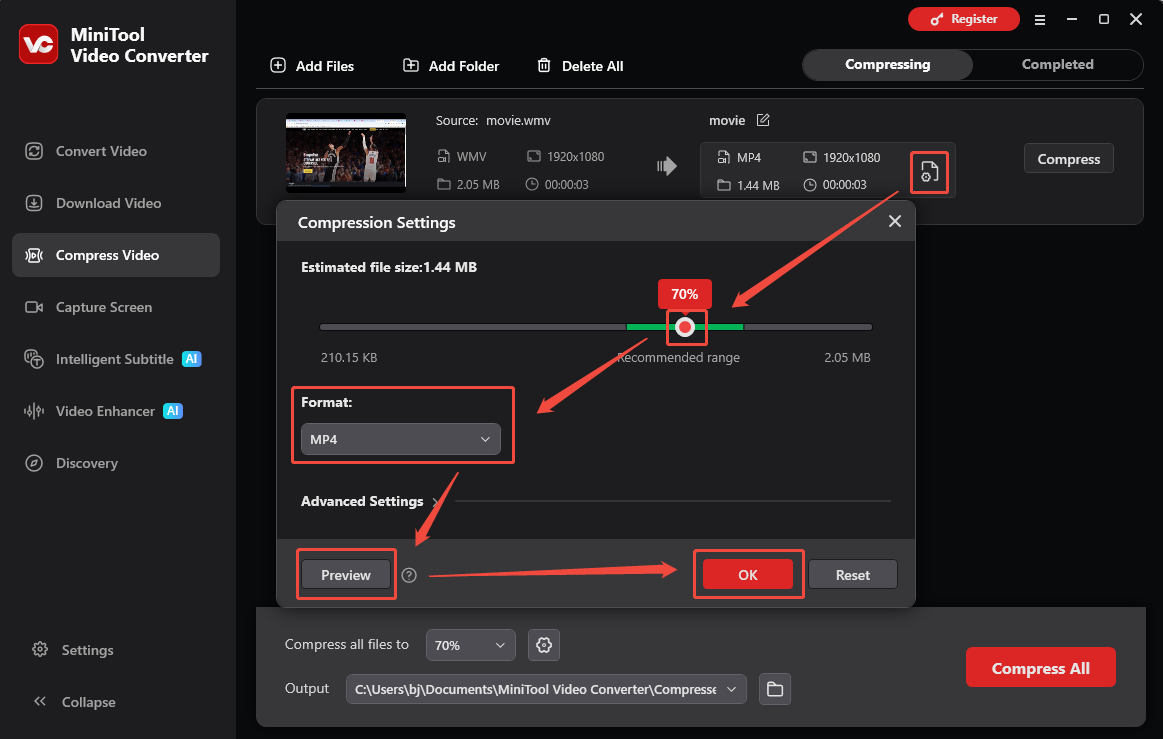
Click the Settings icon to open the compression options. From there, you can drag the red dot to adjust the video compression level. Then, you can expand the Format option to choose an output format. Next, click the Preview option to check the video. Finally, click OK to save the changes.
4. Compress the Video
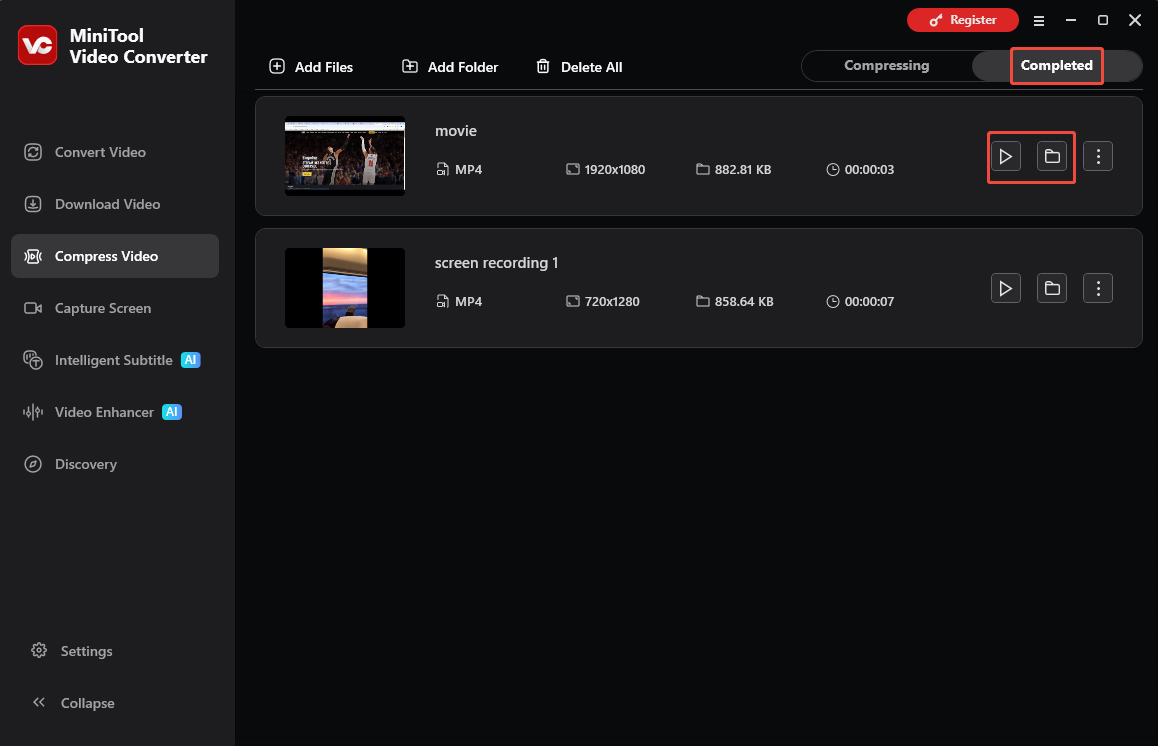
Press the Compress button to begin. Once done, the compressed video will be available under the Completed tab, where you can play it or find its location on your device.
Option 2: Use VEED.IO (Online)
VEED.IO is an online AI video editor with text-to-video, auto-captions, voice translations, and more. It also comes with multiple common editing tools that allow you to add music to video, remove background noise from video, compress videos, convert videos, and more.
In addition, this online tool supports adjusting compression parameters, such as resolution, bitrate, and frame rate, and displays the estimated output file size in real time.
1. Visit VEED.IO
Go to the VEED.IO website: https://www.veed.io/tools/video-compressor.
2. Import the WMV video
Click the Compress a Video option, then click the Upload files area in the new interface to upload the WMV video to VEED.IO.
3. Configure the Video Compression
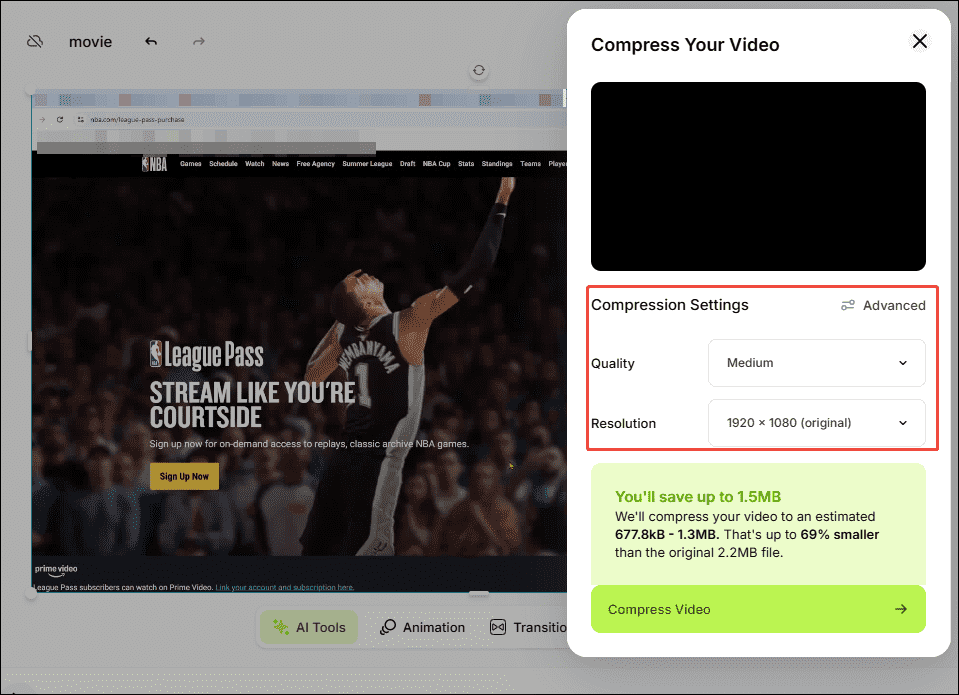
In the new interface, set the video quality and resolution under the Compression Settings section.
4. Start Compression Parameters
Click the Compress Video option to start the WMV compression process.
5. View the Compressed Video
When the video compression ends, click the Play icon to view the compressed. You can also click the Download file option to save it to your local drive.

Method 2: Trim the Unnecessary Part
MiniTool Video Converter also functions as a video cutter, helping users split, cut, or trim videos. In other words, you can use this feature to split a video and cut out unwanted sections, or remove the beginning and end to reduce the file size of a WMV video.
Fast Track Steps:
- Launch MiniTool Video Converter
- Open the Cut Video section
- Import the WMV video file
- Cut or trim unwanted footage
- Preview the edited video
- Select an output location
- Export the video to your local file
Follow the steps below to compress WMV videos using MiniTool Video Converter.
MiniTool Video ConverterClick to Download100%Clean & Safe
1. Launch MiniTool Video Converter
2. Add your WMV file
On the Home page, click the Cut Video option to upload your WMV file. Then, the video will automatically appear in the timeline in the new interface.
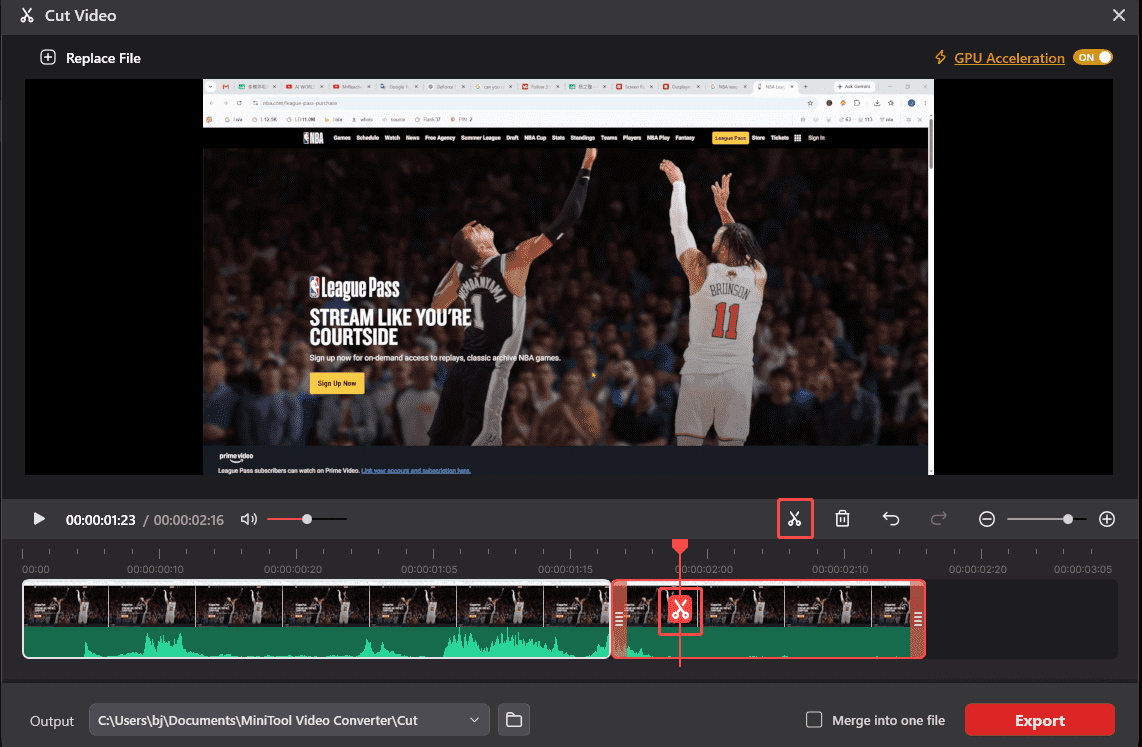
3. Trim or cut the WMV video
Hover your mouse cursor over the start or end point of the clip, and you’ll see an arrow icon appear. Drag the icon toward the middle of the clip to remove unwanted portions of the clip.
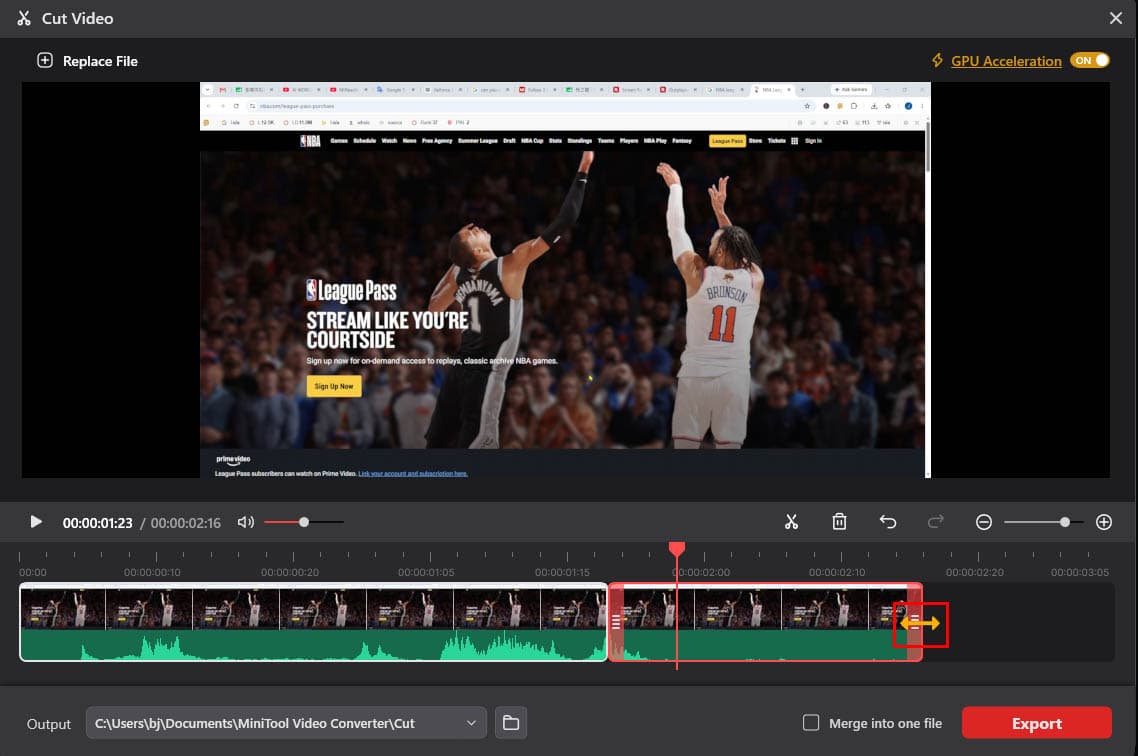
Or, tap the video clip, set the start and end points for the unwanted section, and tap the Cut icon. Then, select the separated clip and tap Delete to remove it.
4. Preview the video
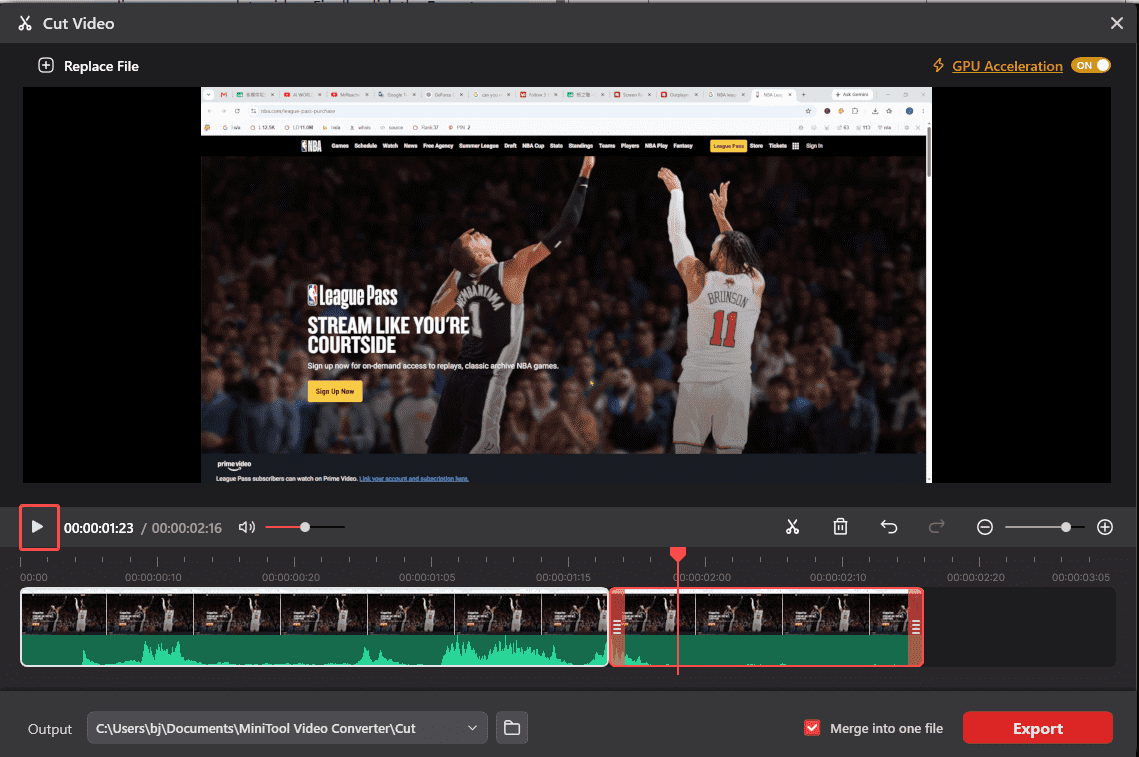
Click the Play icon to see the edited video and make sure the unwanted part of the video has been removed before exporting.
5. Export the WMV file
Expand Output and choose the destination folder. Check Merge into one file to combine the clips into a single video, then click Export to save the edited video.

How to Compress a WMV File for Email
- Compress WMV
- Create a ZIP File
- Share a Video Link
As we mentioned above, WMV is one of the best video file options for email attachments. However, if your WMV video file exceeds the email attachment size limit, it should be compressed. Let’s quickly review some of the major email attachment size limits.
- Gmail: 25 MB on a computer or iPhone, and 20MB on Android.
- Outlook: 20 MB
- Proton: 25 MB
- Yahoo: 25 MB
- AOL: 25 MB
- Titan: 30 MB
How to compress a WMV file for email? Generally speaking, there are 3 methods.
Method 1: Compress WMV
A video compressor is an effective tool to reduce your WMV file size and make it easy to share via email. On a PC, you can follow the steps above to shrink your WMV file size using MiniTool Video Converter. Alternatively, you can switch to some online file compression services. On a smartphone, you can go to the app store to find video compressors for Android or iPhone.
Method 2: Create a ZIP File
Additionally, you can also compress a WMV video to a ZIP and send it via email without losing any video data. On a Windows PC, right-click on the video file and choose Send to > Compressed (zipped) folder.
Method 3: Share a Video Link
Another way to compress a WMV file for email is to create video links. You can upload your video to a site like YouTube or a cloud service like Google Drive, Dropbox, or OneDrive to generate a link.
Understanding Video Compression
With the development of the Internet and mobile devices, video has become an indispensable part of people's daily lives. Video is a great way to record their lives, share experiences, convey information, and more. However, video files tend to be large and unsuitable for transmission and storage.
To solve this problem, people began to use video compression, that is, to encode and convert the original video data through specific algorithms and methods to reduce the size of the video file for easy transmission and storage. Video compression can be divided into two types: lossy compression and lossless compression. Lossy compression will delete or reduce part of the video data during the compression process to reduce the file size but may cause problems such as video blur and distortion. Lossless compression optimizes the video encoding and reduces data redundancy without sacrificing video quality.
Conclusion
It’s easy to compress WMV videos to smaller sizes. You can select a video compressor to reduce its file size quickly, use the video cutting feature to trim unnecessary parts, make a ZIP file, or turn the video into a link.
Finally, if you encounter any problems using MiniTool Video Converter, you can send an email to support@minitool.com for help.
You may also like:
- Uncompressed vs Compressed (Lossless & Lossy) Audio Formats
- Variable Bitrate vs Constant Bitrate: A Comparative Analysis in Audio Encoding
- What’s the Best Frame Rate for 4k Video? 60 FPS or 50 FPS?
- How to Convert Video into 4K Resolution on Different Platforms
People Also Ask
About The Author

Position: Columnist
Jade is an experienced multimedia tech writer who has authored hundreds of guides on screen recording, video editing, and software troubleshooting. Dedicated to bridging the gap between complex technical concepts and user-friendly solutions, she specializes in providing clear, actionable advice.
User Comments :