

AAC uses lossy compression, producing smaller files with good quality and wide compatibility. FLAC uses lossless compression, preserving original audio quality but creating larger files with limited device support. Use FLAC converters like MiniTool Video Converter and Zamzar to convert AAC to FLAC.
Unsure about the differences between AAC and FLAC? This AAC vs. FLAC comparison covers six key aspects: definition, file size, sound quality, compression, compatibility, and pros and cons, to help you choose the right audio format.
AAC vs FLAC: What’s the Difference?
| AAC | FLAC | |
| File Size | Small | Large |
| Sound Quality | Good | Excellent |
| Compression | Lossy compression | Lossless compression |
| Compatibility | Excellent | Good |
| Pros | Small files, wide support | Original quality, open-source |
| Cons | Quality loss | Large files, limited support |
1. Definition
AAC, short for Advanced Audio Coding, is a lossy compressed audio format that is the successor of the MP3 format. AAC is suitable for digital TV, online broadcasting, and internet streaming, and you can find it in Apple devices.
FLAC stands for Free Lossless Audio Codec which is a lossless compression coding. Compared with other lossy compression coding like AAC and MP3, FLAC will not harm the original audio quality.
2. File Size
In general, AAC files are about three to five times smaller than FLAC files. There are many factors like bitrate, compression levels, and others that will influence the size of an audio file.
The audio files compressed by the FLAC algorithm can be reduced to between 50% and 70% of their original size. While AAC can get a smaller audio file size with its high-level compression.
3. Sound Quality
According to their compression method, the sound quality of FLAC is better than AAC.
AAC uses a lossy compression codec, which causes loss of audio data information during the compression process. On the contrary, FLAC uses a lossless compression codec that can maintain its original audio information.
4. Compression
FLAC uses lossless compression, while AAC uses lossy compression. AAC removes some subtle audio details to reduce file size, whereas FLAC preserves all original audio data while still compressing the file.
5. Compatibility
AAC offers broader compatibility than FLAC. It is widely supported by platforms such as iTunes, YouTube, and streaming services, as well as Windows, Mac, Android, iPhone, iPad, Nintendo, PlayStation, and more.
FLAC is compatible with most major operating systems, including Windows, BeOS, Amiga, and Unix-like systems such as Linux, but it is not as widely supported across devices and services as AAC.
6. Pros and Cons
To help you compare AAC and FLAC directly, this part provides you with the pros and cons of FLAC vs AAC formats.
# FLAC
Pros:
- High sound quality.
- Lossless compression codec.
- It is free and open-source.
- Suitable for archiving.
Cons:
- Limited compatibility.
- Have a large file size.
# AAC
Pros:
- Have a small file size.
- Support various platforms and devices.
- Suitable for streaming.
Cons:
- Lossy compression codec.
2 Best AAC to FLAC Converters
This part recommends you 2 best AAC to FLAC converters.
1. MiniTool Video Converter
MiniTool Video Converter is a recommended tool for converting AAC to FLAC, as it supports a broad range of audio and video formats. What’s more, this software is easy to use.
Here is how to convert an AAC file to FLAC format:
Fast steps:
- Download and install MiniTool Video Converter.
- Import the AAC audio.
- Choose the output format.
- Convert AAC to FLAC.
1. Download and install MiniTool Video Converter.
Get the installer of this free video converter. Then, follow the on-screen instructions to install it on the computer. Then, launch it.
MiniTool Video ConverterClick to Download100%Clean & Safe
2. Import the AAC audio.
Click the Add Files option to add the target AAC audio.
3. Choose the output format.
Click the output settings icon to open a window. Then, click the Audio tab, choose FLAC, and select Lossless Quality.
4. Convert AAC to FLAC.
Click the Convert option to start the conversion.
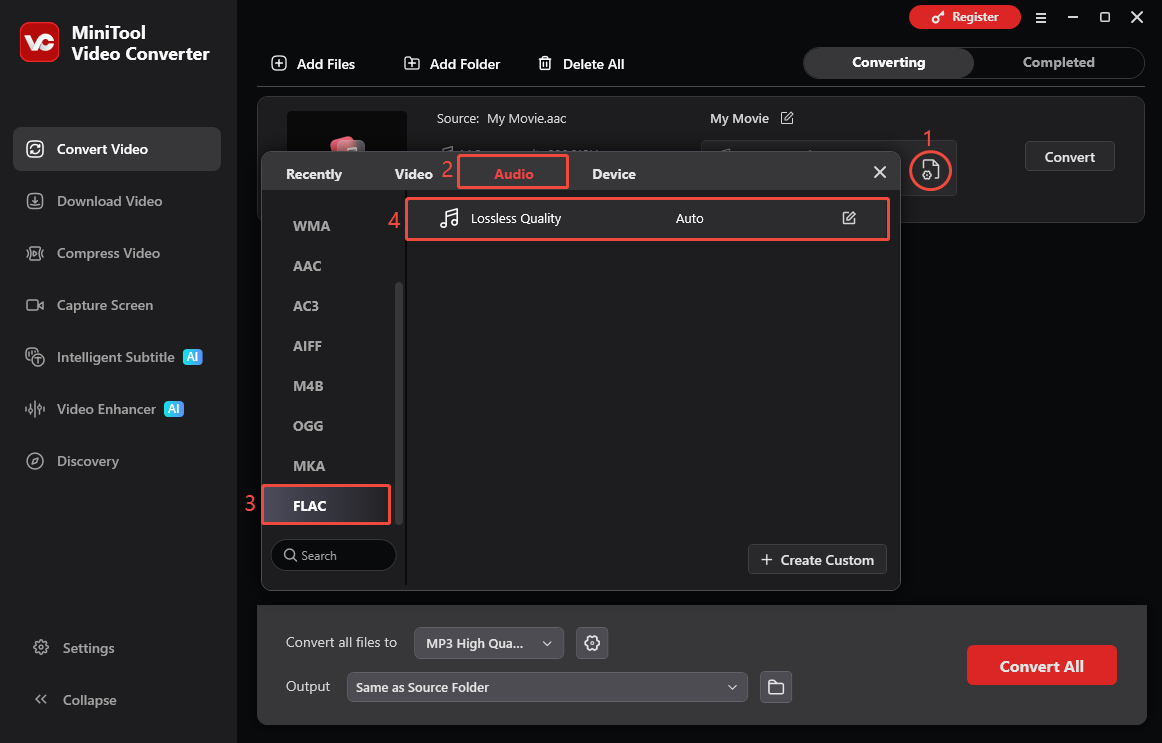
Then, you can click the folder icon under the Completed tab to find the FLAC file.
2. Zamzar
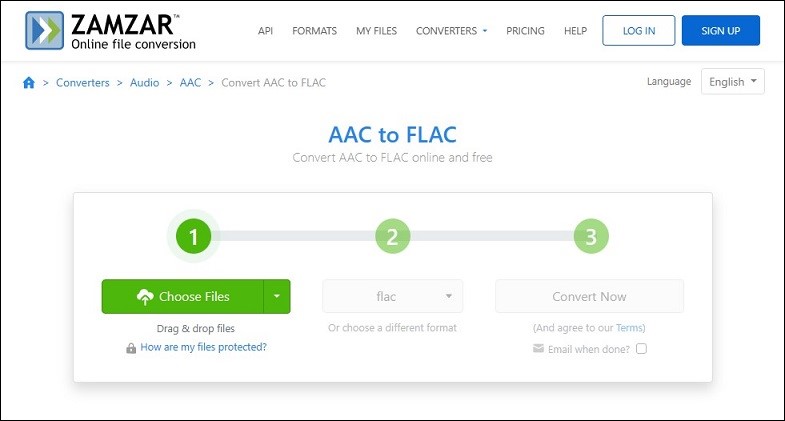
Zamzar is a good choice to convert AAC to FLAC. This online converter also allows you to convert more than 1000 file formats and supports importing files from your device, Google Drive, Box, Dropbox, OneDrive, or by pasting a URL.
In addition to audio conversion, it also allows you to convert videos, images, and documents. If you are a free user, the maximum file size you can upload is 50 MB.
![How to Convert AAC to WAV: Top 8 Converters [Desktop & Online]](https://images.minitool.com/videoconvert.minitool.com/images/uploads/2025/03/convert-aac-to-wav-thumbnail.png)
Conclusion
AAC vs FLAC, AAC is smaller and widely supported. FLAC has better sound quality but larger file size. Which one to choose depends on whether storage efficiency or original sound quality is the priority. If you want to convert AAC to FLAC, MiniTool Video Converter and Zamzar are both good choices!
If you have any questions or suggestions about MiniTool Video Converter, send an email to support@minitool.com for support.
User Comments :