

MKV not playing in Windows 10 is often caused by format or codec incompatibility. This article provides six solutions: convert MKV to MP4, M4V, or WMV with MiniTool Video Converter, use another media player, play MKV in a browser, modify Registry keys, install an MKV codec, or update Windows 10.
Why Won’t an MKV File Play in Windows Media Player?
An MKV file may not play in Windows Media Player because Windows Media Player does not natively support the MKV container format or the video/audio codecs used inside the file.
When you want to play a video file on your Windows 10 computer, you can directly use the Windows snap-in video player – Windows Media Player, which is pre-installed on your computer. You don’t need to install a third-party media player to play videos. It is convenient.
However, Windows Media Player doesn’t support all types of video files. When you want to play an MKV video in Windows 10, you may discover that Windows Media Player won’t play MKV. As per the list of Windows Media Player file types, MKV is not included.
When this issue happens, you can also receive one of the following error messages or another similar error message, showing that you can’t play the MKV file using Windows Media Player:
“Can’t play.
Can’t play because the item’s file format isn’t supported. Check the store to see if this item is available there.
0xc1010090 (0xc00d3e8c)”

OR
“Can’t play.
This item is in a format we don’t support. Please choose something else.
0xc00d36b4 (0xc00d36b4)”

The inability to play MKV files on Windows 10 is not an unsolvable problem. Simply by downloading and installing the appropriate MKV codec for Windows Media Player, you can play MKV files using Microsoft's media player.
Installing an MKV codec is not the only way to resolve this issue; there are other methods available to play these files on a Windows 10 PC. This article introduces various ways to solve the problem.
What to Do If MKV Is Not Playing in Windows 10?
- Convert MKV to a Windows Media Player-supported format
- Use a different media player
- Play MKV files using a web browser
- Modify your Registry keys
- Install the MKV codec in Windows Media Player
- Upgrade Windows 10 to the latest version
Method 1: Convert MKV to a Windows Media Player Supported Format
Fast steps:
- Install and launch MiniTool Video Converter.
- Add the MKV file.
- Choose the output format.
- Select the destination folder.
- Start conversion.
- Find the converted file.
One direct way to fix MKV playback issues in Windows 10 is to convert MKV to a Windows Media Player-supported format such as MP4, M4V, or WMV. MiniTool Video Converter, a free video converter, is worth trying.
 MiniTool Video Converter
-
 Batch convert video/audio files among 1000+ formats.
 - Quickly compress videos for easy storage and transfer.
- Accurately extract subtitles from video/audio files.
- Effectively enhance video quality.

You can use this software to convert your MKV video to an MP4. Here are detailed steps:
1. Install and launch MiniTool Video Converter.
Click the button below to download MiniTool Video Converter. Then install and run it.
2. Add the MKV file.
Click the Add Files option to import the MKV files you need to convert.
3. Choose the output format.
Open the Convert all files to option to access the output format window, switch to the Video tab, and choose one format supported by Windows Media Player. Here, I take MP4 as an example. Next, you can select the video resolution you like from the right panel.
4. Select the destination folder.
Open the Output list to choose a folder to save the converted files.
5. Start conversion.
Click the Convert All button to activate all conversion tasks.
6. Find the converted file.
Once conversion tasks are finished, it will switch from the Converting subtab to the Completed subtab automatically. You can click the folder icon to locate the converted file.
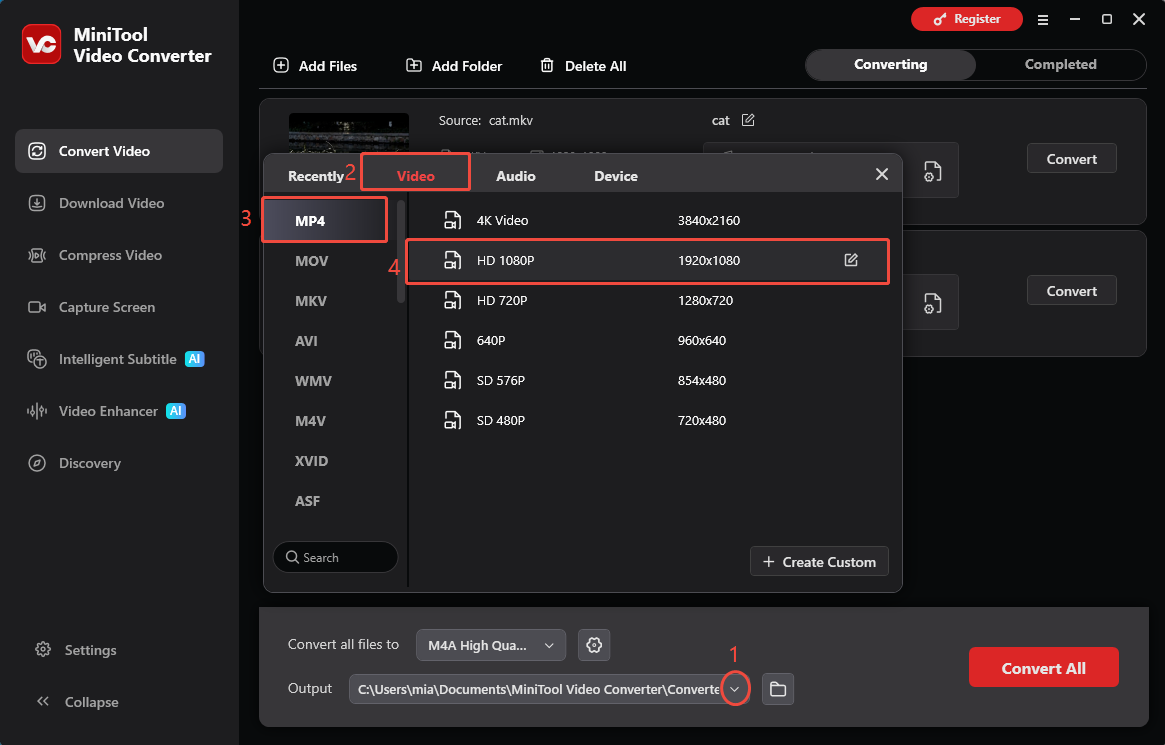
With these simple clicks, you can convert your MKV files to any format that is supported by Windows Media Player.
Method 2: Use a Different Media Player
How to play MKV files in Windows 10 if Windows Media Player can’t play them? You can use a different media player that supports playing MKV videos. Here are many choices like VLC media player, 5KPlayer, Media Player Classic, DivX Plus Player, etc.
Method 3: Play MKV Files Using a Web Browser
You can also use your web browser to play the local videos on your computer. But you need to install a certain extension to your web browser. If you are using Google Chrome, you need to install the Picture-in-Picture Extension (by Google) in Chrome to enable the Chrome picture-in-picture feature and then play your MKV video that is not supported by Windows Media Player.
But using a web browser to play MKV videos is not as convenient as using a special media player. For example, you can’t import external subtitles to the video and adjust the size of the video. You are also not allowed to use video or audio effects to enhance your watching experience.
If you don’t have any special demands, you can use this method to play MKV files. However, if you want to have the best watching experience, you’d better convert to a video format supported by Windows Media Player or use another method to play MKV videos.

Method 4: Modify Your Registry Keys
We note there was a related recommendation in TechJourney: Fix Film & TV Can’t Play MKV & MKA Because File Format Isn’t Supported in Windows 10. The workaround mentioned in this discussion can be used to make your Windows Media Player play MKV files.
In the post, the author suggested “download a Win10-MKV.zip file and then execute the Win10-MKV.reg registry registration file inside the archive to merge the MKV and MKA-related registry keys to the system registry.” You can find the download method from the above link.
This method can fix the corrupted registry keys that cause MKV file won’t play in Windows 10. But modifying the registry key improperly may corrupt your computer. If you are not a professional Windows user, you’d better not use this method. You can use select another method from this article to solve the issue.
Method 5: Install the MKV Codec in Windows Media Player
The MKV codec can help you play MKV files using Windows Media Player. Microsoft doesn’t offer an official download source. You need to search for a third-party MKV codec download source.
Many codec packs are available for download. The best choices are K-Lite and CCCP. For example, I search for MKV codec in Chrome and get the search results as follows.
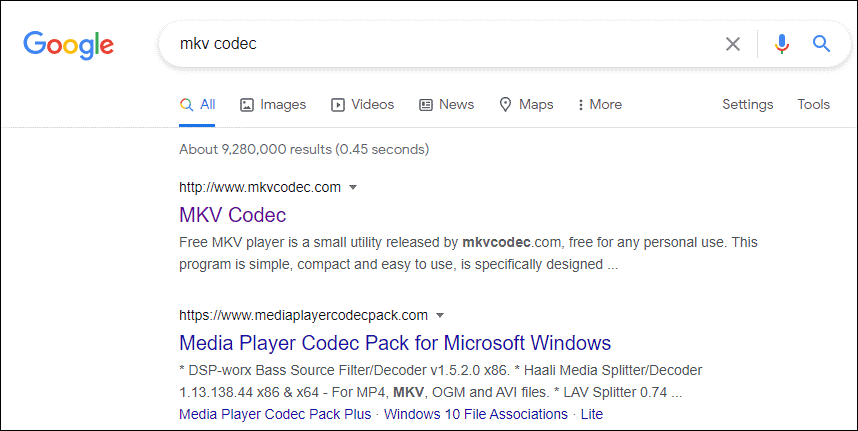
I select the first search result and enter the following page:
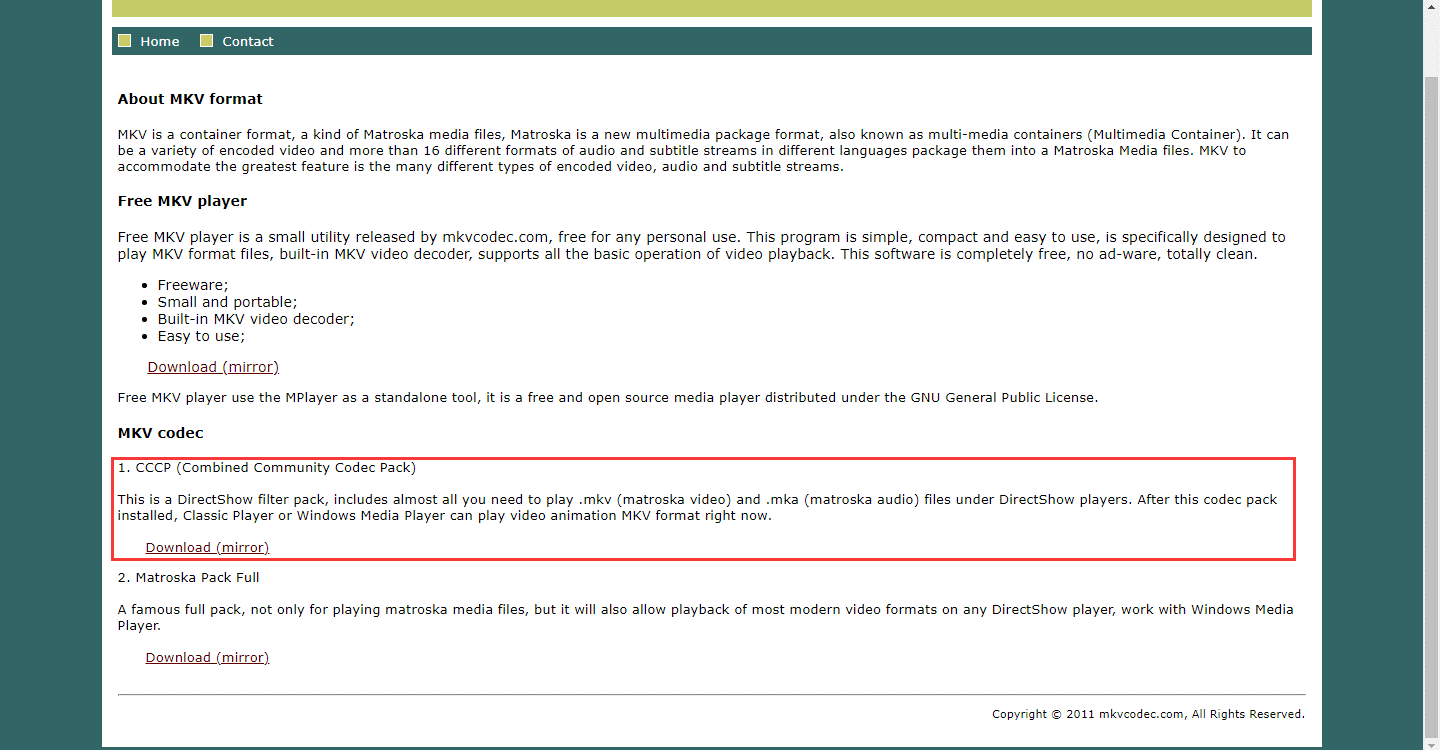
Since CCCP is the best choice, I click the Download link and download the MKV codec pack on my computer. Then, I installed it on my computer.
Method 6: Upgrade Windows 10 to the Latest Version
Some users report that they solved the issue by updating Windows 10 to the latest version. You can also try this method:
- Click Start.
- Go to Settings > Update & Security > Windows Update.
- The system will automatically check for updates. If not, you can click the Check for updates button to manually start checking for updates. If there are available updates, they will be automatically downloaded and installed on your computer.
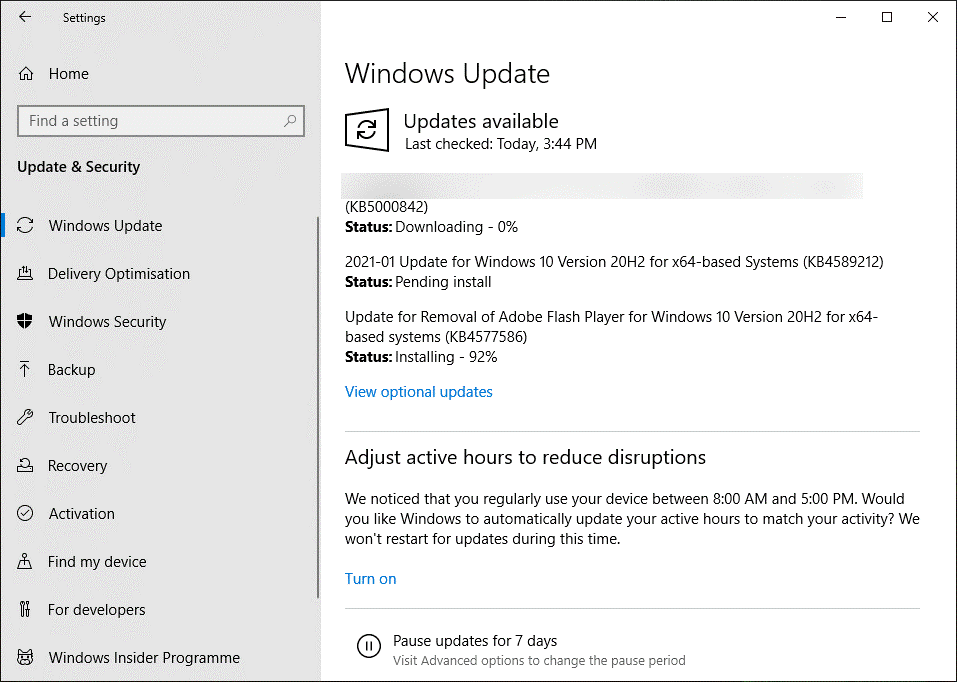
Windows updates can fix the bugs and issues on your computer that may cause MKV not playing in Windows 10.
Conclusion
If you have MKV not playing in Windows 10, you can just try the methods mentioned in this post to help you out. The most reliable approach is to convert MKV video to a format that is supported by your video player. This method doesn’t make any changes to your system.
If you have encountered any problems in the process of using MiniTool Video Converter, you can contact support@minitool.com for help.
People Also Ask
2. VLC
3. 5KPlayer
4. Media Player Classic
5. DivX Plus Player
6. CyberLink PowerDVD
7. RealPlayer
8. KMPlayer
9. PotPlayer
10. GOM Player
User Comments :