

MKV vs MP4, what’s the difference between them? This article compares them in terms of compatibility, file size, and supported video/audio, which means they are suitable for different scenarios. It also shows 2 effective video converters, including MiniTool Video Converter and MiniTool MovieMaker.
MKV (Matroska Multimedia Container) is a free and open-source container format introduced in 2002 by independent developer Steve Lhomme. It can hold an unlimited number of video, audio, image, or subtitle tracks, making it an ideal tool for professional video editing. .mkv is the standard file extension for video files, but Matroska also includes .mka, .mks, and .mk3d.
MP4 (MPEG-4 Part 14) is a standard digital multimedia container format widely used for storing video, audio, subtitles, and still images. It is based on the MPEG-4 specification and has become an industry standard and the most widely supported video format globally. This format uses the proprietary .mp4 file extension.
MKV vs MP4: Core Differences
To compare MKV and MP4, the compatibility, file size, and supported video/audio indicate their core differences.
| MKV | MP4 | |
| Compatibility | Low | High |
| File Size | Large | Small |
| Supported Video/Audio | High | Low |
MKV vs MP4: Compatibility
For both video editing software and playback devices, MP4 has better compatibility than MKV. If you want to upload videos to your YouTube, MP4 should be the best choice.
Besides, due to its small size and versatility, MP4 is also your best choice for videos optimized for mobile devices. Perhaps the pre-installed media player on a mobile device doesn’t allow you to play an MKV file.
MKV vs MP4: File Size
MKV’s multi-track nature allows it to neatly categorize and preserve its contained video, audio, subtitles, and images. It’s often used to save multi-track, high-bitrate, high-definition movies, so MKV files are usually quite large.
To ensure smooth playback of videos on online streaming platforms, MP4 uses the H.264 video codec to significantly compress both video and audio, typically retaining only one video track and one audio track. Therefore, it has a small file size.
MKV vs MP4: Supported Video/Audio
MP4 format typically contains H.264 (x264)/Xvid/MPEG4 video and AAC/MP3 audio. MKV format supports lossless FLAC audio, while MP4 doesn’t. It only supports basic or simple subtitle formats such as SRT. While highly efficient, its multi-track performance is limited.
MKV files support optional SSA subtitles and audio tracks, which MP4 doesn’t. More importantly, it can accommodate an unlimited number of optional audio tracks and advanced soft subtitle formats such as SSA/ASS, allowing users to seamlessly switch languages during playback.
MKV vs MP4: Pros & Cons
MKV vs MP4: Advantages and Disadvantages Comparison Both MKV and MP4 are video container formats, each with its unique technical advantages and disadvantages.
MP4 Advantages:
- Industry Standard: Recognized as the official ISO standard, widely supported by the industry.
- Universal Playback: Plays on almost all systems, devices, and browsers.
- High Storage and Bandwidth Efficiency: Smaller file size, saving storage space for uploading and downloading.
MKV Advantages:
- Open Source and Free: Widely supported by free software developers.
- Codec Support: Supports almost all media codecs.
- Multi-track: Contains unlimited video, audio, and subtitle tracks.
MP4 vs. MKV: Which Is Better?
MP4 or MKV, which is better for your videos? There is no fixed answer.
Each video format has its advantages for special cases, but not as good for other situations. For example, MP4 is widely used to play videos on a web browser with less file overhead. While MKV is more suitable for converting Blu-Ray discs and DVDs to video files.
The most important factor for video quality in MP4 vs. MKV is the codec. MKV supports more codecs, making more options available. However, you need to make sure that the codec you choose is reliable and available for the software you are using. For example, if you prefer to use Google’s cutting-edge codec VP9, you’d better go with MKV rather than MP4.
How to Convert MKV to MP4 or Vice Versa
- MiniTool Video Converter
- MiniTool MovieMaker
1. MiniTool Video Converter
MiniTool Video Converter is worth trying for the conversions between MKV and MP4. Also, it is free and easy to use. MiniTool Video Converter allows customizing advanced parameters, such as frame rate, resolution, and bitrate. Below is a detailed tutorial on how to convert MKV to MP4 using MiniTool Video Converter.
- Download MiniTool Video Converter
- Import MKV file
- Set MP4 as the output format
- Start the conversion
- Check the result
 MiniTool Video Converter
-
 Batch convert video/audio files among 1000+ formats.
 - Quickly compress videos for easy storage and transfer.
- Accurately extract subtitles from video/audio files.
- Effectively enhance video quality.

Step 1. Download MiniTool Video Converter
Download MiniTool Video Converter and follow the on-screen prompts to install it. Then, open this application.
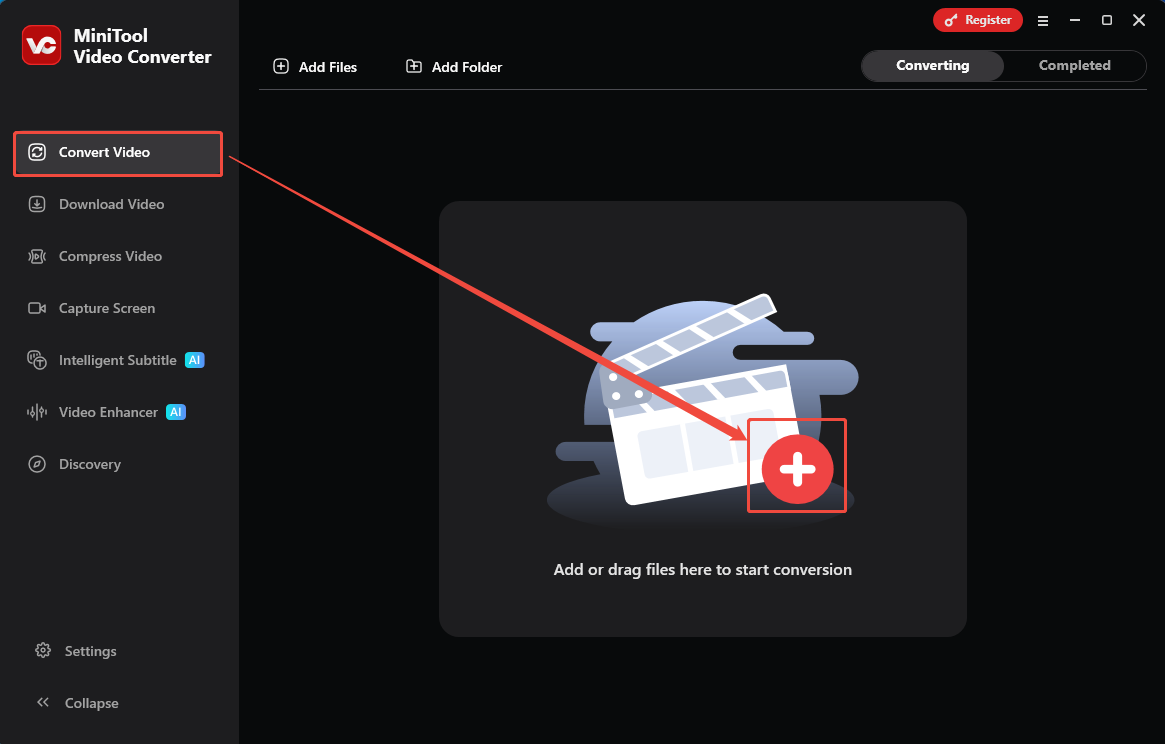
Step 2. Import the MKV Video
Click the Plus icon in the Convert Video tab to import the MKV file.
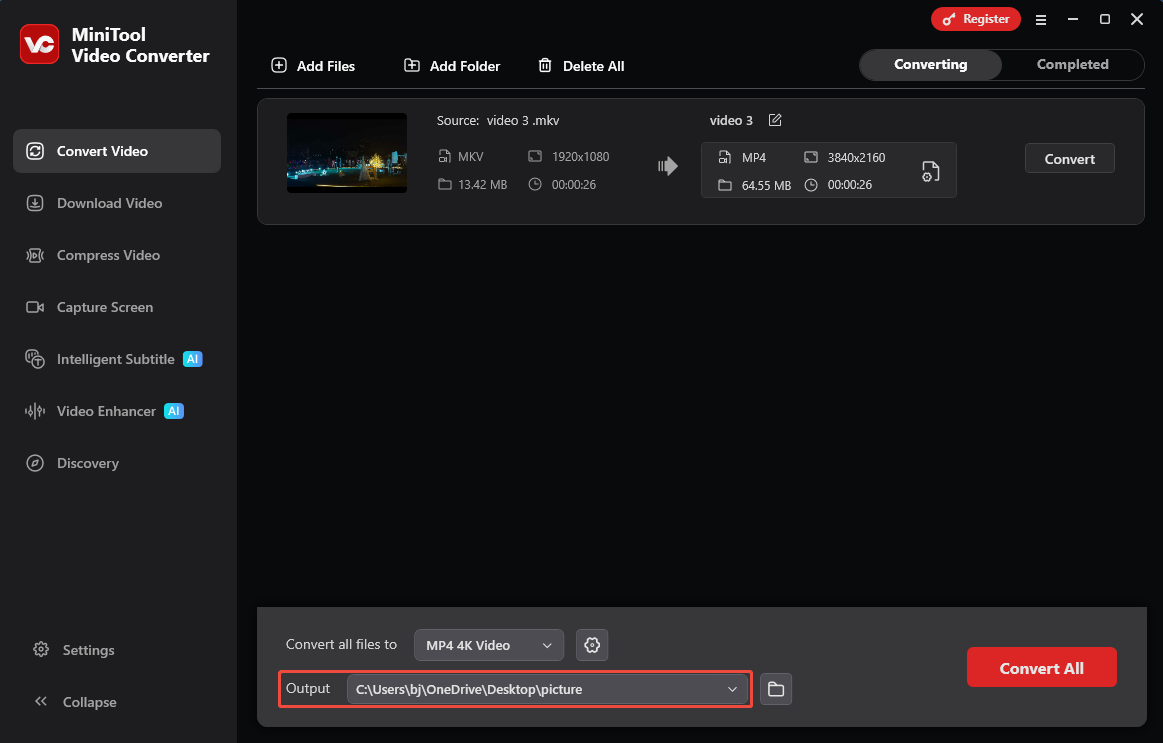
Step 3. Choose a storage Location for the Output Format
Expand the Output option to select a suitable saving path for the converted video.
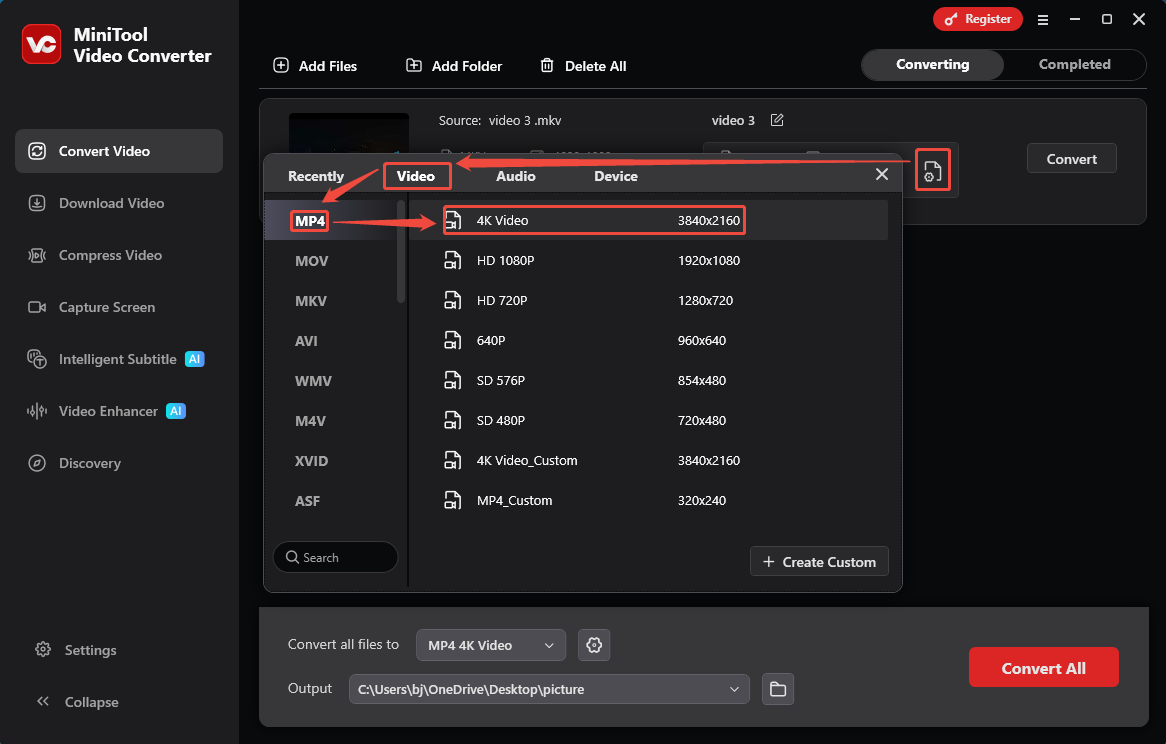
Step 4. Specify MP4 as the Converted Format
On the uploaded conversion task, click on the Gear icon to go to the output format settings window. There, switch to the Video tab and choose MP4. Next, specify a resolution option, such as 4K Video.
Step 5. Start the Conversion
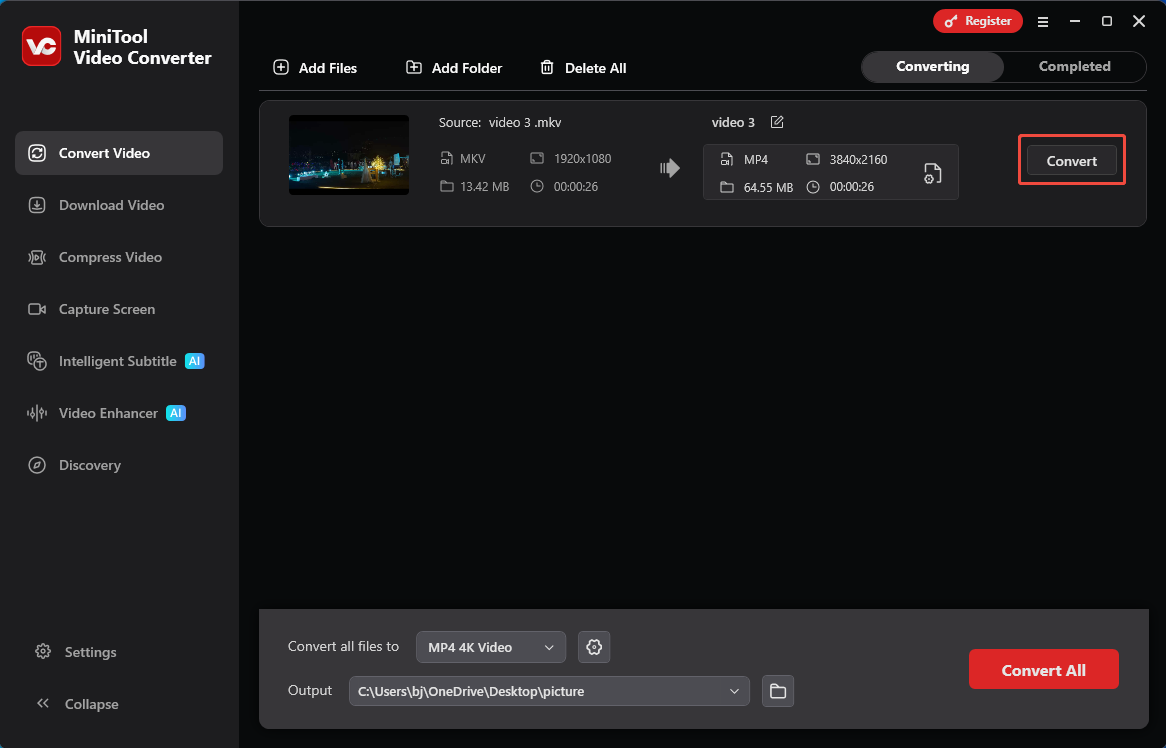
After the output format is set, go back to the main interface. There, click on the Convert button to start the conversion process.
Step 6. Check the Converted Video
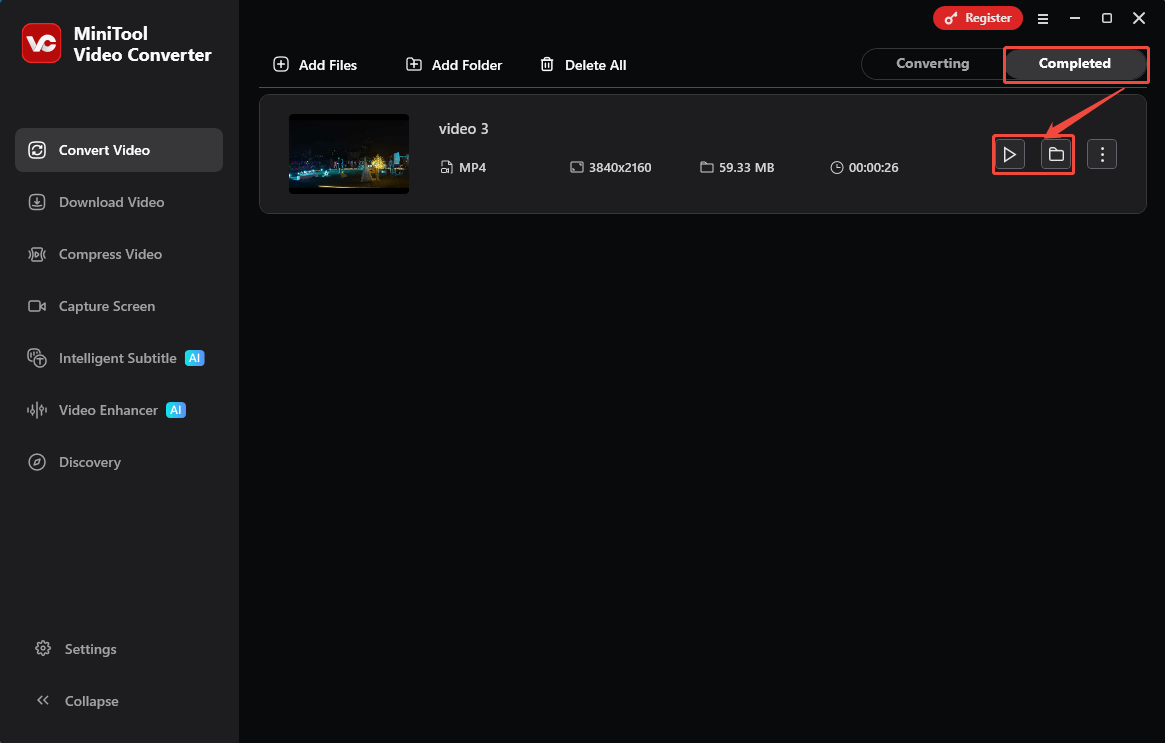
Once the conversion finishes, this converter will navigate to the Completed tab. There, click on the Play icon to check the converted video. Or click on the Folder icon to locate it on the computer.
MiniTool Video Converter can not only convert MKV to MP4 but also allows converting more than 1,000 video and audio formats.
2. MiniTool MovieMaker
MiniTool MovieMaker is another available video conversion tool that supports MKV to MP4. It can be used on Windows 11/10/8/7. MiniTool MovieMaker is suitable for editing the MKV video before converting it to MP4. The following steps are how to do this conversion using MiniTool MovieMaker.
Fast Track:
- Install MiniTool MovieMaker
- Import MKV video
- Add the MKV video to the timeline
- Set MP4 as the output format
- Start the export
Step 1. Obtain MiniTool MovieMaker
Download MiniTool MovieMaker and follow the instructions to install it.
MiniTool MovieMakerClick to Download100%Clean & Safe
Step 2. Import the MKV Video
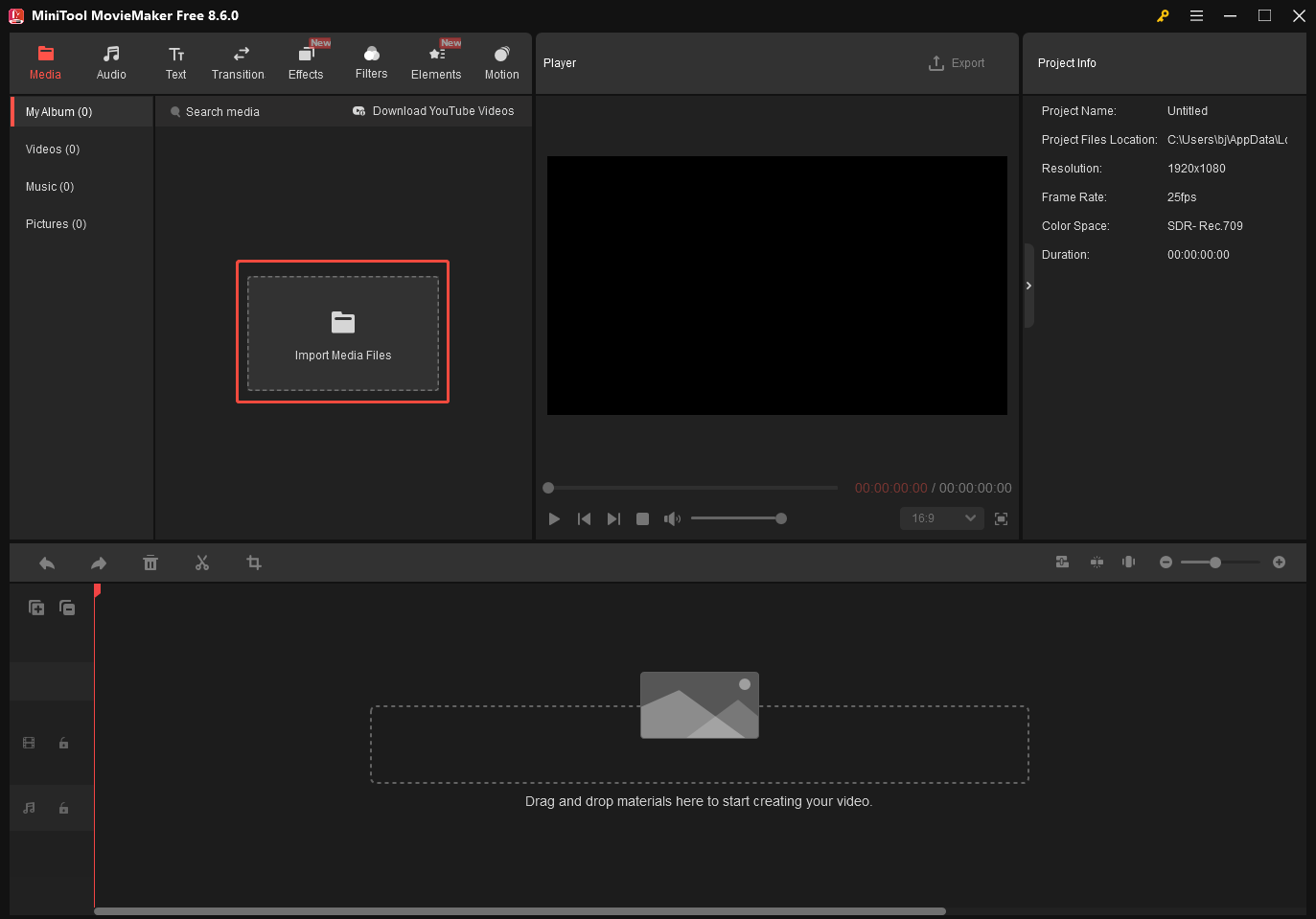
Run MiniTool MovieMaker and close the pop-up promotion window to enter the main interface. Click on Import Media Files to import the MKV video.
Step 3. Add the Target Video onto the Timeline
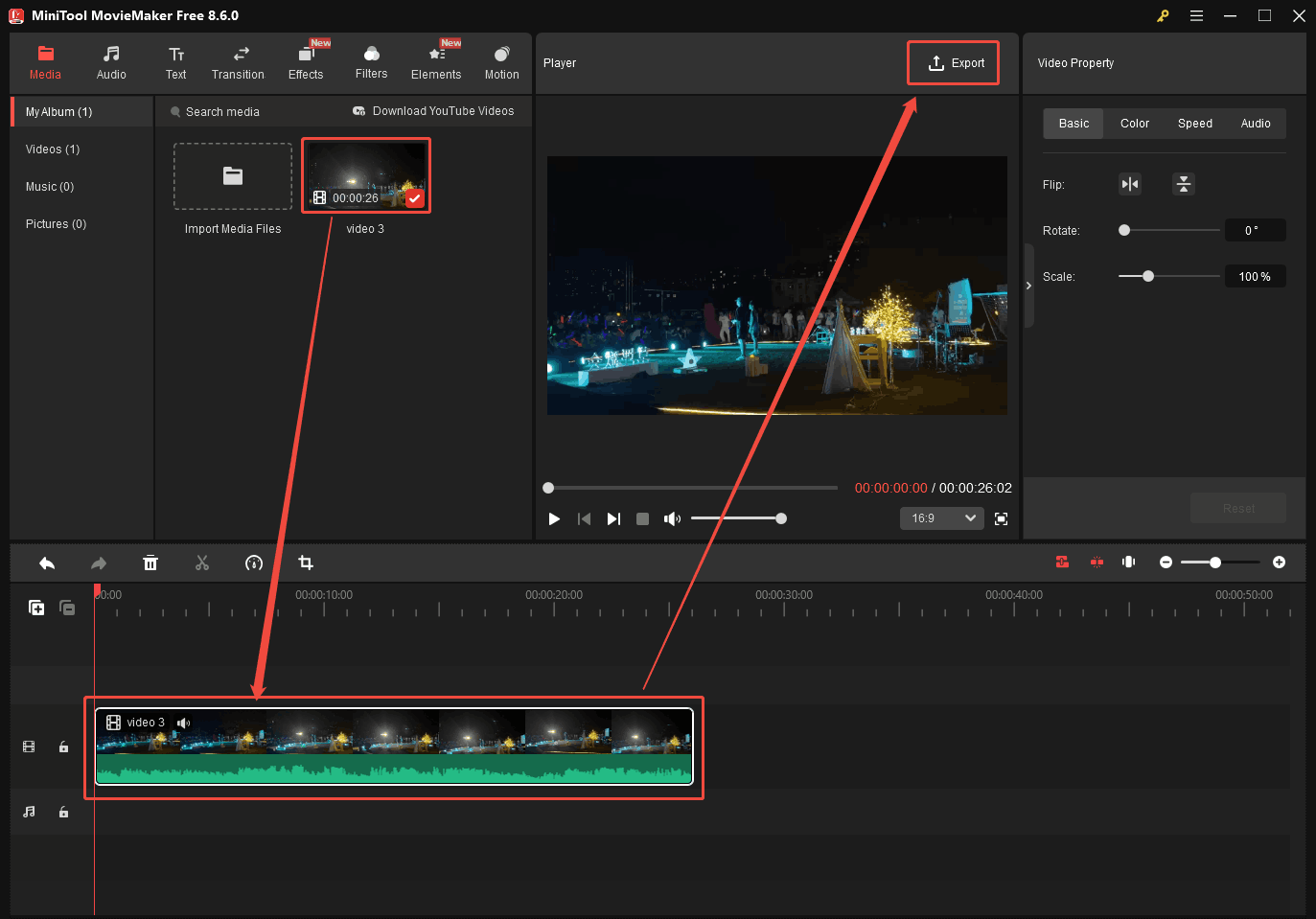
Drag your imported MKV video onto the timeline. Then, click on the Export option at the upper-right of the player to open the Export window.
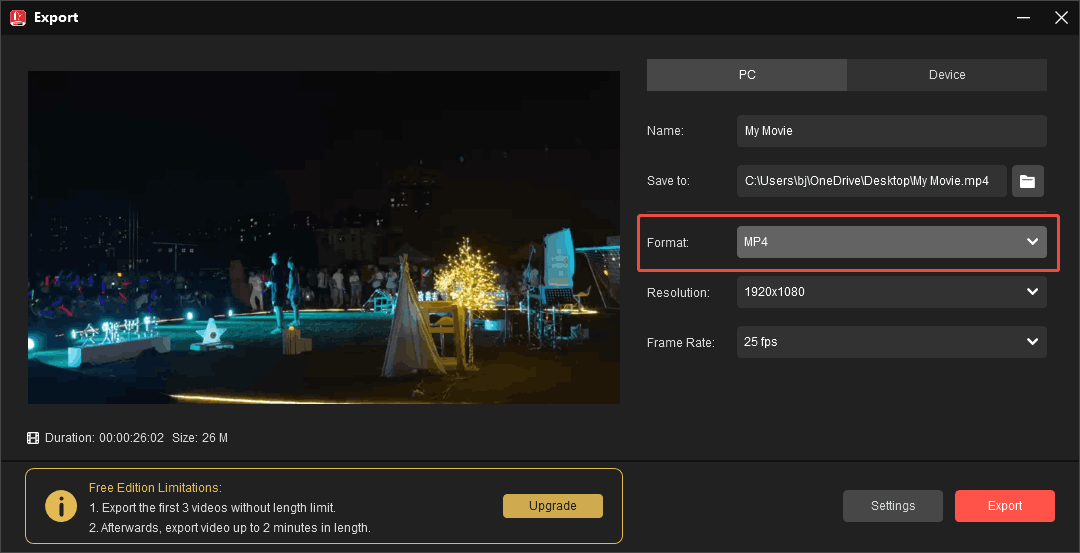
Step 4. Configure MP4 as the Exported File
In the Export window, choose the default MP4 in the Format option as the exported format.
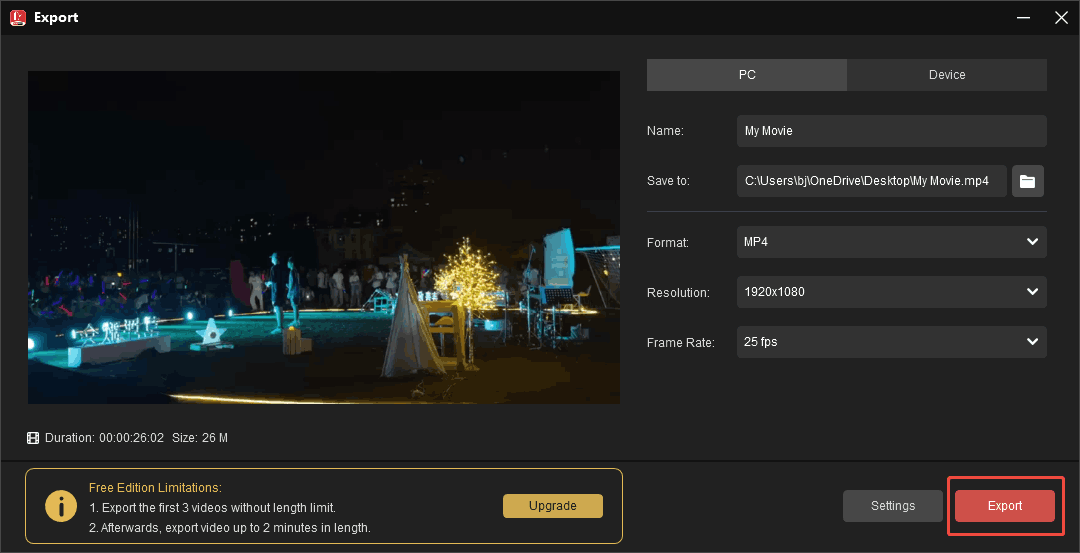
Step 5. Start the Export Process
After the output format is set, click on the Export button to start the conversion. Once the process ends, you can click the Find Target button to open the specified location and use the video file immediately.
These steps are also appropriate for conversion from MP4 to MKV, which is similar to the steps above.
Bottom Line
MKV and MP4, they have differences in compatibility, file size, and supported video/audio. If you are looking for greater compatibility and a smaller video size, then converting MKV to MP4 is the best choice. This post recommends 2 practical converters: MiniTool Video Converter and MiniTool MovieMaker.
If you have any related issues about MiniTool Video Converter or MiniTool MovieMaker, ask for help via support@minitool.com.
User Comments :