

When Windows Media Player won’t play AVI videos on a PC, you can fix the issue by installing AVI codecs, converting AVI to another format, trying another media player, fixing corrupted AVI files, updating graphics drivers, or updating Windows.
Why Won’t Windows Media Player Play AVI Files
Sometimes Windows Media Player won’t play AVI files, and you may receive error messages, such as:
- Invalid File Format Error=8004022F
- Cannot play back the file. The format is not supported. Error=80040265
- Video not available, cannot find 'VIDS:xxxx' decompressor.
Generally speaking, the AVI video playback error is due to a missing or incompatible codec. If your AVI video or other video files use a codec that’s not available or compatible with Windows Media Player, you cannot open the AVI video file using WMP.
Apart from that, other reasons for an AVI file not playing in Windows Media Player include video corruption, outdated drivers, etc.

How to Fix Windows Media Player Not Playing AVI Files
Here are 6 methods to fix AVI files not playing on Windows 10 and 11.
- Install AVI codecs: Download codec packs such as K-Lite Codec Pack for smooth AVI playback.
- Convert AVI to another format: Use MiniTool Video Converter to convert AVI files to MP4, which is more widely supported.
- Use another media player: Try alternatives like VLC Media Player that natively support AVI files.
- Fix corrupted AVI files: Use video repair tools if the file is damaged.
- Update graphics drivers: Update display adapters through Device Manager.
- Update Windows: Install the latest Windows updates to resolve compatibility issues.
Method 1: Install AVI Codecs
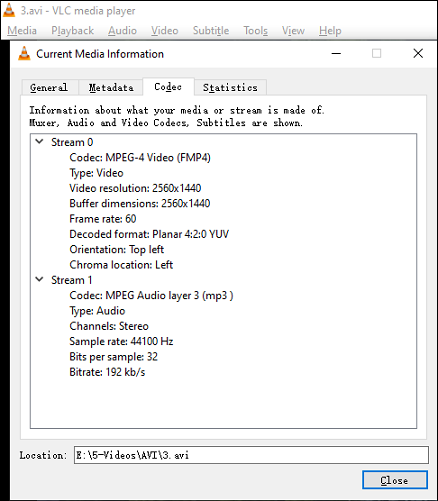
To fix the problem that Windows Media Player won’t play AVI files due to codec incompatibility, you should install the required codec file. The simplest way is to install a video codec pack, as it contains all the elements needed to play all common video and audio files. For instance:
- K-Lite Codec Pack
- Media Player Codec Pack
- Windows 10 Codec Pack
- Shark007 Codecs

Method 2: Convert AVI to Another Video Format
Fast Track Steps:
- Install MiniTool Video Converter.
- Select the Convert Video module and import the AVI file.
- Set the output format to MP4.
- Start the conversion task.
The second solution for AVI files not playing on Windows 10 is to convert them to another video file type, such as MP4 encoded with H.264, which is currently the most popular and widely accepted video format. To do this, you need a video converter like MiniTool Video Converter.
 MiniTool Video Converter
-
 Batch convert video/audio files among 1000+ formats.
 - Quickly compress videos for easy storage and transfer.
- Accurately extract subtitles from video/audio files.
- Effectively enhance video quality.

This application supports a wide range of media formats and converts video to video, video to audio, and audio to audio. It also allows you to change the video resolution, frame rate, bitrate, and encoder.
Here’s how to convert AVI to MP4:
1: Download and install
First, download and install the AVI video converter on your PC.
2: Import the target AVI file
After installation, launch the conversion software, and you will access the Home page. Click the Convert Video module on the left sidebar, then click Add Files at the top to add the desired AVI video.
3: Set MP4 as the output format
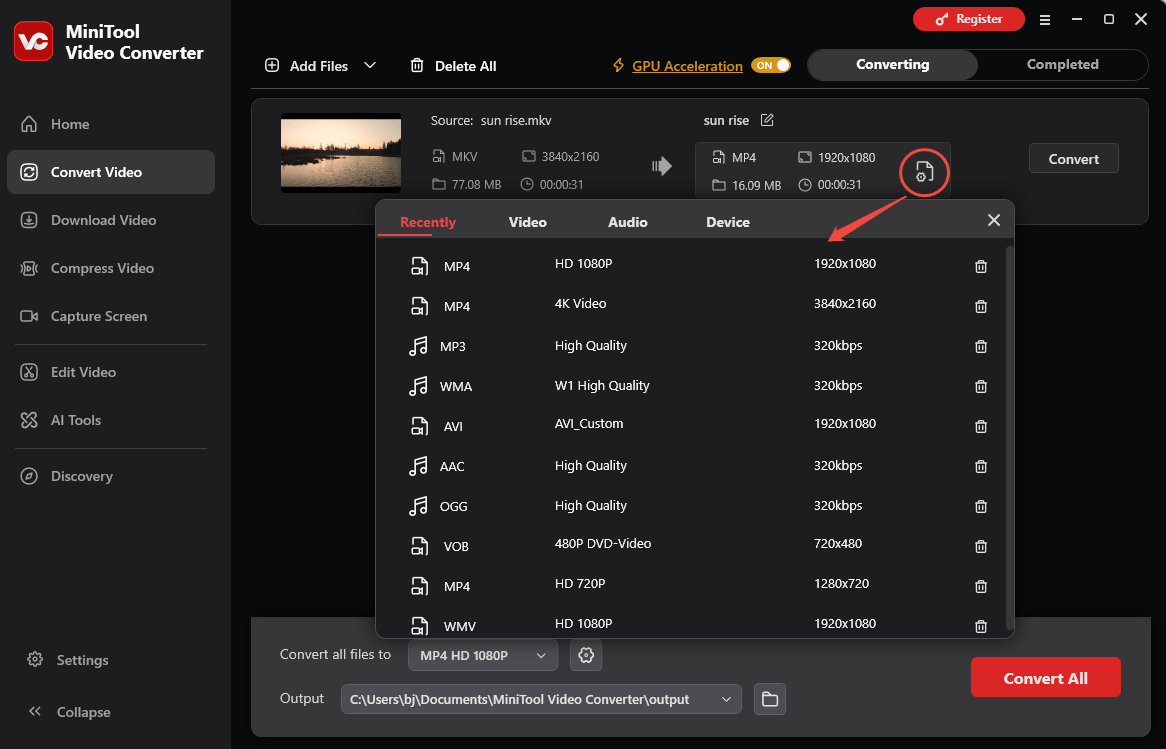
Click the Settings icon on the right-hand side. From the next pop-up window, go to the Video tab and select MP4 in the left sidebar. Next, click the desired resolution profile.
4: Convert AVI to MP4
Click the Output bar to change the output folder, and click Convert or Convert All to begin the conversion.
After that, locate the converted video and check if Windows Media Player can play it.
Method 3: Use Another Media Player
Alternatively, you can use a Windows Media Player alternative to play your AVI files. Many media players support the AVI file format, such as VLC Media Player, which can also play partially downloaded videos.
Method 4: Fix Corrupted AVI Files
If your AVI video doesn't play in other video players, it may be due to file corruption. Corrupted video files cannot be opened with any media player. If so, you need a video repair tool to fix your AVI files and resolve the issue of AVI videos not playing on Windows.

Method 5: Update Graphics Drivers
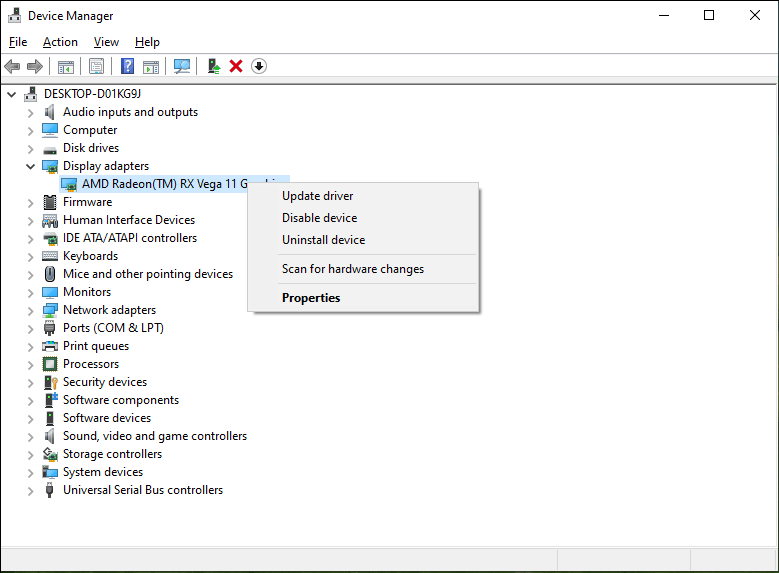
When Windows Media Player won’t play AVI files, you can also try updating the graphics driver to fix the issue. To do this:
- Press the Win + R keys to open the Run dialog box.
- Type “devmgmt.msc” and click OK to open Device Manager.
- Expand Display adapters.
- Right-click on the target graphics device, click Update driver, and follow the on-screen prompts.
Method 6: Update Windows
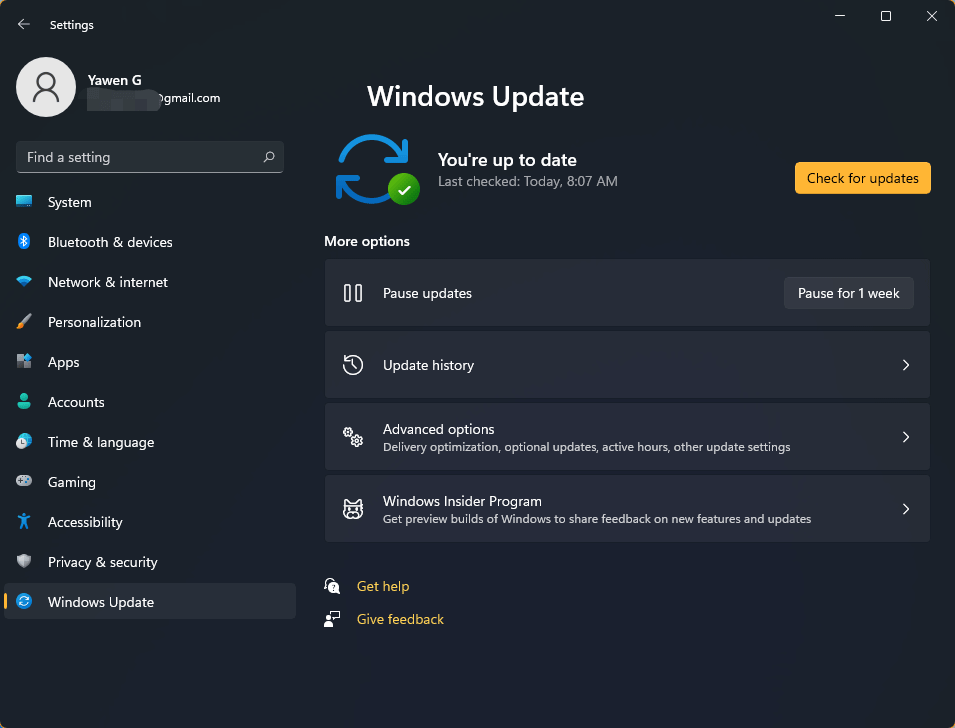
You can also update your Windows OS to fix the AVI files not playing issue.
- On Windows 10: Press the Win + I key to open Settings, and click Update & Security > Windows Update > Check for updates.
- On Windows 11: Select Start > Settings > Windows Update > Check for updates.

Conclusion
Windows Media Player not playing AVI files is a common issue, but it's usually easy to fix. Whether the problem is missing codecs, file corruption, or outdated drivers, the six methods above offer reliable solutions.
If you have problems using MiniTool Video Converter, email support@minitool.com for assistance.
People Also Ask
1. Open VLC, click Media in the top menu bar, then select Convert/Save.
2. On the File tab, click the + Add button to select your AVI file.
3. Click the Convert/Save button at the bottom.
4. Choose Video - H.264 + MP3 (MP4) from the Profile drop-down menu.
5. Click Browse to choose a folder to save the file.
6. Click Start to begin the conversion.
About The Author

Position: Columnist
Cora is a tech writer specializing in digital media workflows, with over six years of hands-on experience in video post-production, media transcoding, and screen capture. Her writing is always clear and practical. Cora also produces in-depth software reviews for users across skill levels to help them find the right tool and enjoy video editing.
User Comments :