

Compress video for website can significantly improve loading speeds. This article introduces two video converters, MiniTool Video Converter and Media.io, for this task. The general steps involve uploading the video, adjusting compression settings or video parameters, selecting an output format, and starting the compression process.
As a video creator, I frequently upload high-quality videos to websites, but I often encounter slow loading times. It turned out that the large file sizes were significantly slowing down page loads. After testing several video compression methods, I ultimately selected two video conversion tools that I believe are worth trying:
- MiniTool Video Converter
- Media.io
How to Compress Video for a Website
Whether you are looking to compress video for website background or simply to make it easier to upload to a site, MiniTool Video Converter and Media.io are top-recommended tools for the job.
Fast Track Steps:
- Open the video conversion tool
- Import a video
- Set the desired compression level
- Start the compression
- Check the video file
Option 1: MiniTool Video Converter
MiniTool Video Converter is a free and user-friendly video compression tool. It handles video files of any size and imposes no limits on the number of compression tasks. Additionally, it is an excellent choice for boosting efficiency, as it allows users to compress up to 5 videos simultaneously.
Furthermore, it supports MP4, WEBM, and MKV formats, catering to a wide range of user needs. It is worth noting that the compressed video does not contain any watermarks.
Let’s see how to compress a video for a website using MiniTool Video Converter.
1. Hit the button below to download the MiniTool Video Converter installer and follow the on-screen instructions to install it on your Windows PC.
 MiniTool Video Converter
-
 Batch convert video/audio files among 1000+ formats.
 - Quickly compress videos for easy storage and transfer.
- Accurately extract subtitles from video/audio files.
- Effectively enhance video quality.

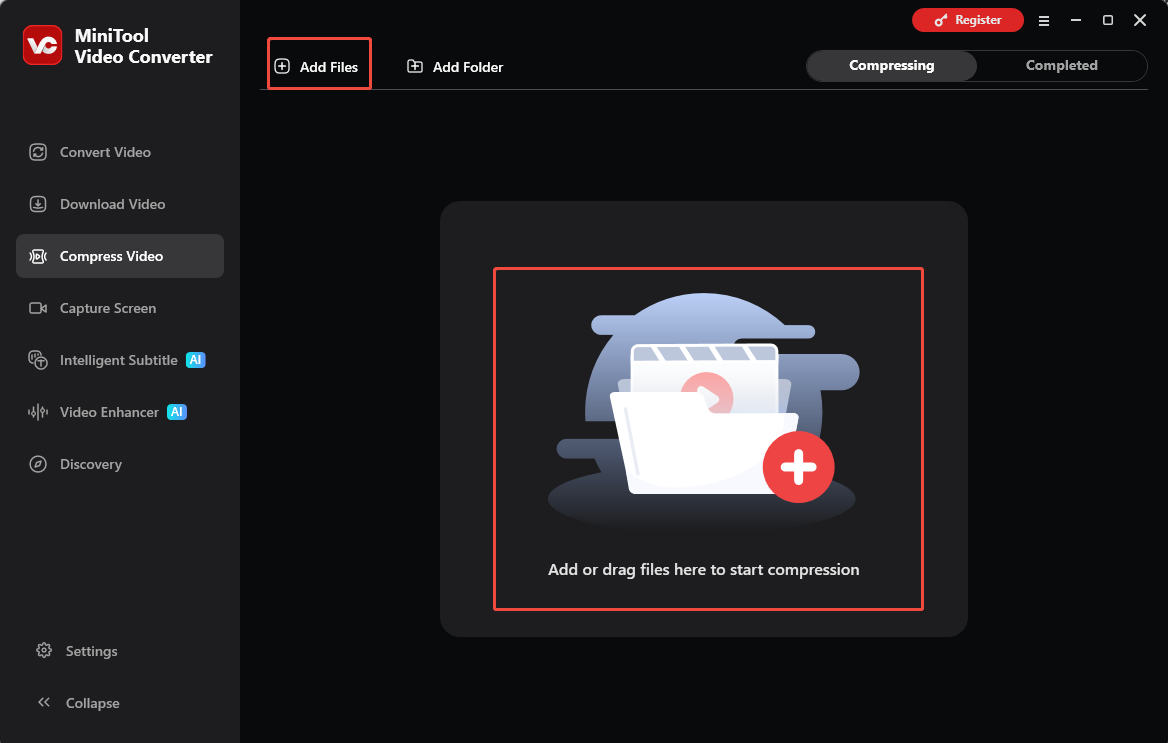
2. Open the free video compressor for the web. On the left side of the screen, switch to the Compress Video tab.
3. Click the Add Files button or the Add or drag files here to start compression area to load the video you want to compress.
4. Click the Gear icon. In the Compression Settings window, you can adjust the video’s compression level and output format.
- To adjust the video size: This software compresses videos to 70% by default. You can manually move the slider leftwards to further reduce your file size. However, here’s one thing to note: the video quality is related to its size. Generally speaking, the higher the compression rate, the lower the video quality will be. Thus, you are advised to keep your compression level within the recommended range to strike a good balance between file size and quality.
- To adjust the video format: Go to the Format section and expand the output format option. Just choose one you like from the drop-down list, click OK to confirm your changes.
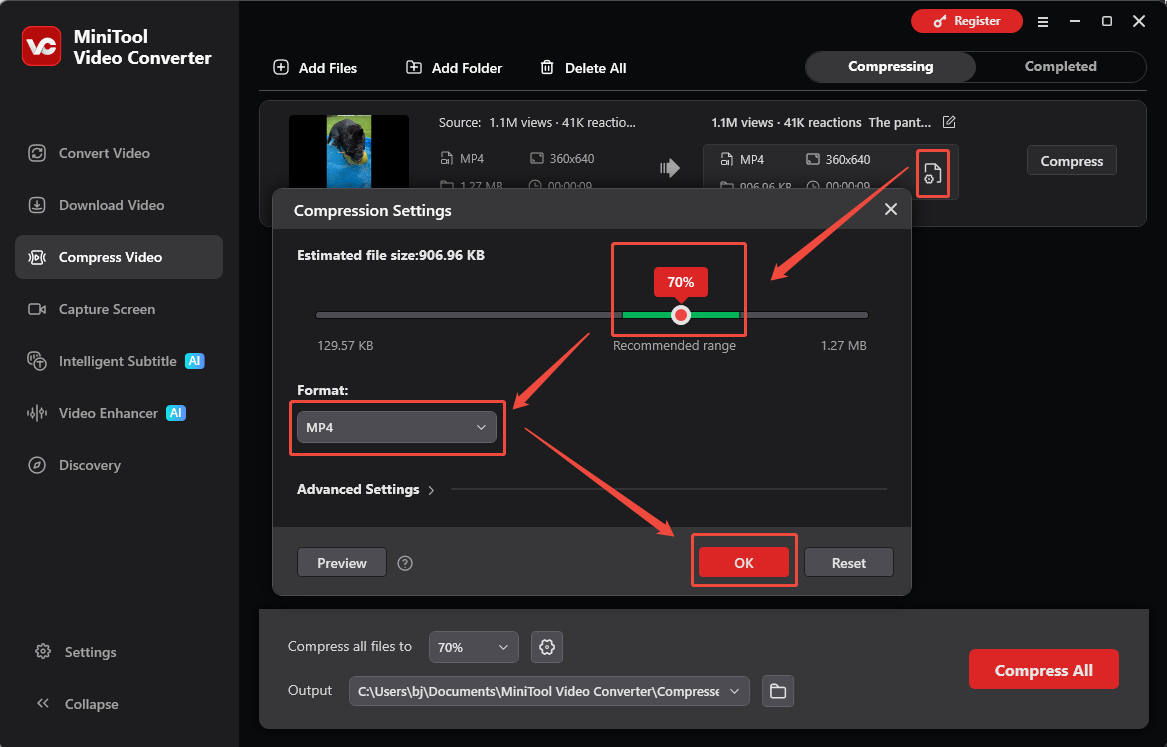
5. To give a name to the video, click the pen icon and type the name in the box. You can also choose a destination folder to save the compressed video by expanding the Output settings. Then, click Compress to start the process.
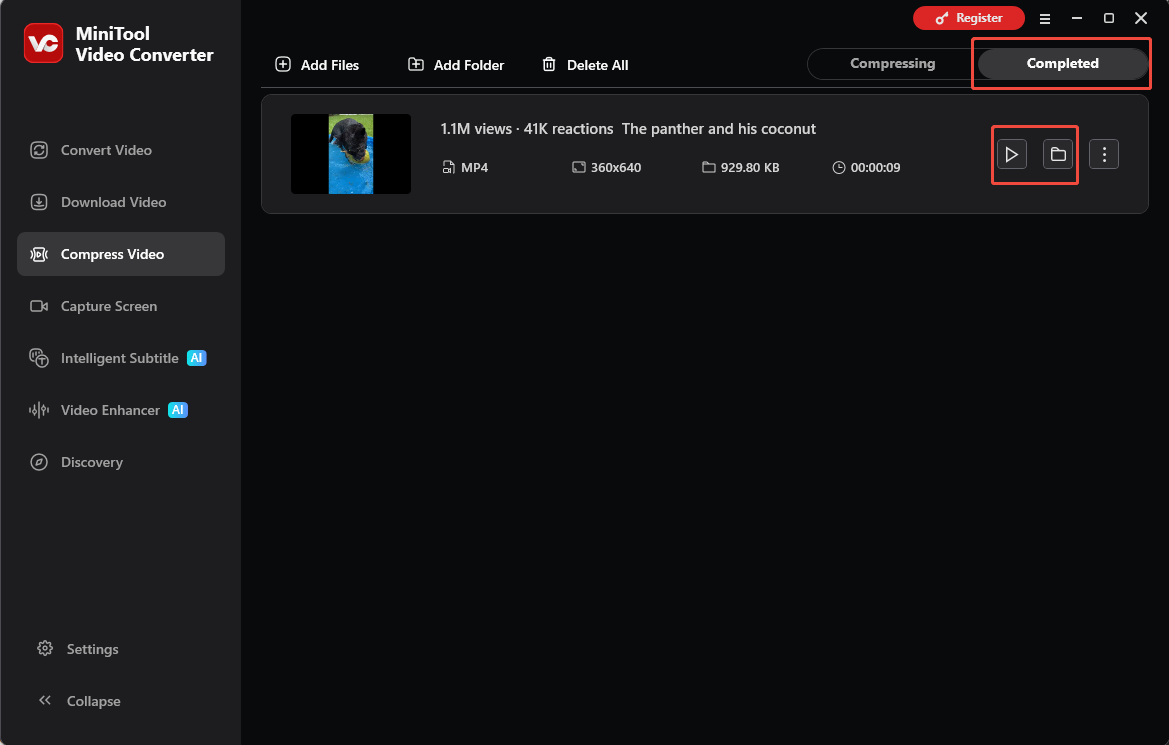
6. Once the compression is finished, you will be automatically led to the Completed tab. Click the play icon to watch the compressed video. Or click the folder icon to locate the compressed video on your computer.
Option 2: Media.io Online Video Compressor
If you want to compress your video online, you can use Media.io, a video compressor for web. It’s free and supports many formats, like MP4, WebM, MOV, AVI, MKV, WMV, and More. If you have several videos to compress, you can use the batch-compression feature. Additionally, Media.io Online Video Compressor lets you control the video size.
1. Click the Click to Upload area to import the video file.
2. Click the Gear icon next to the video, Then, drag the progress bar to adjust the compression level.
3. Next, expand the Resolution and Bitrate dropdown menus, then select the appropriate resolution and bitrate. Finally, click the Apply option to save the changes.
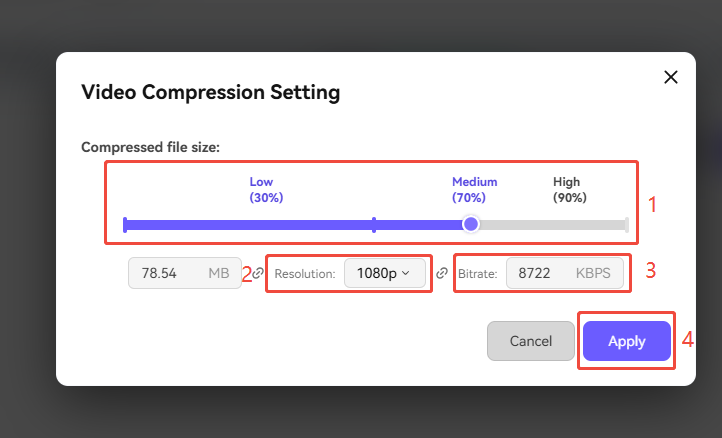
4. Click the Compress All option to start the process. Finally, click the Download All option to save the video to your computer.
In general, the best way to compress video for website depends on your specific needs. MiniTool Video Converter offers more flexibility, while Media.io is more convenient.
Conclusion
Compress video for website can improve operating speed, and then retatin visitors, and improve your Google ranking. You can use MiniTool Video Converter or Media.io Online Video Compressor to compress the video size. Now, choose a tool you like and make your website faster!
If you need any help while using MiniTool Video Converter, contact us via support@minitool.com.
People Also Ask
About The Author

Position: Columnist
Jade is an experienced multimedia tech writer who has authored hundreds of guides on screen recording, video editing, and software troubleshooting. Dedicated to bridging the gap between complex technical concepts and user-friendly solutions, she specializes in providing clear, actionable advice.
User Comments :