

This post mainly explains several methods to fix videos not playing on Android phones, including restarting the device, clearing the cache, converting the video to an Android-compatible format, updating Android, etc.
Why Won't Videos Play on My Android Phone
With your Android phone, you can easily take, watch, and share videos. It is frustrating when they won’t play. If a video can’t play in an app, this is probably because of poor network performance. In this situation, turn on Airplane mode and then turn it off and enable cellular data or connect to Wi-Fi. Or, you can restart the app or update it to fix the video playback issue.
But sometimes, videos you've recorded on your Android or downloaded from elsewhere simply won't play. Why does this happen? Here are some common reasons:
- Your video file is corrupt.
- Your media player is out of date.
- Your Android operating system is not updated to the latest version.
- Your video is partially downloaded.
- You’ve installed unreliable apps on your phone.
- The video format or codec is not compatible with Android.
How to Fix Videos Not Playing on Android Phone
This section covers three common scenarios where videos won't play on Android and how to fix each one.
Case 1: Videos Not Playing in Your Gallery
Quick fixes:
- Restart your phone
- Clear cache on Android
- Uninstall insecure apps
- Try VLC for playback
- Convert the video to MP4
- Update Android
- Repair the video
1. Restart your device
Restarting your smartphone is the simplest and quickest way to fix videos not playing on your Android. Close all running applications and restart your phone. After that, open Gallery and check if your video is playing.
2. Clear cache on Android
Your Android phone accumulates cache data to reduce the loading time. However, if there are corrupted cache files on your phone, some issues may happen, like videos not playing.
You can clear the cache on your Android device to address issues. To do that, open the Settings app, tap Apps, click your media player or another app whose cache you want to clear, tap Storage, and click Clear Cache to clear the app cache.
Then, go to Gallery and try playing the video again.
3. Uninstall insecure apps
If you’ve installed unreliable applications, they may interfere with your phone's functionality and cause issues like videos not playing on Android. Uninstalling these apps can resolve the problem.
4. Install VLC Media Player
If the video cannot play with the pre-installed video player on Android, consider installing third-party video players like VLC or MX Player from the Play Store to play the video. By the way, VLC can play incompletely downloaded videos.
5. Convert the video
If Android does not support the video format or codec, the video won’t play on your phone. To fix the issue, convert the video to an Android-compatible format like MP4. For this task, MiniTool Video Converter is recommended for its ease of use, unlimited file size, and watermark-free output. Here is how to convert a video for Android in the software.
 MiniTool Video Converter
-
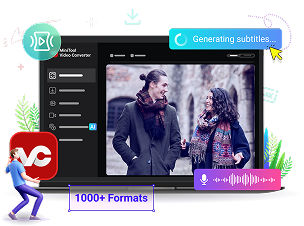
 Batch convert video/audio files among 1000+ formats.
- Quickly compress videos for easy storage and transfer.
- Accurately extract subtitles from video/audio files.
- Effectively enhance video quality.
Fast-track steps:
- Install MiniTool Video Converter.
- Add the target video file.
- Select an Android video format.
- Choose the output folder.
- Start the conversion.
1) Install the video converter
Download and install the video conversion software on your computer.
2) Import the video file
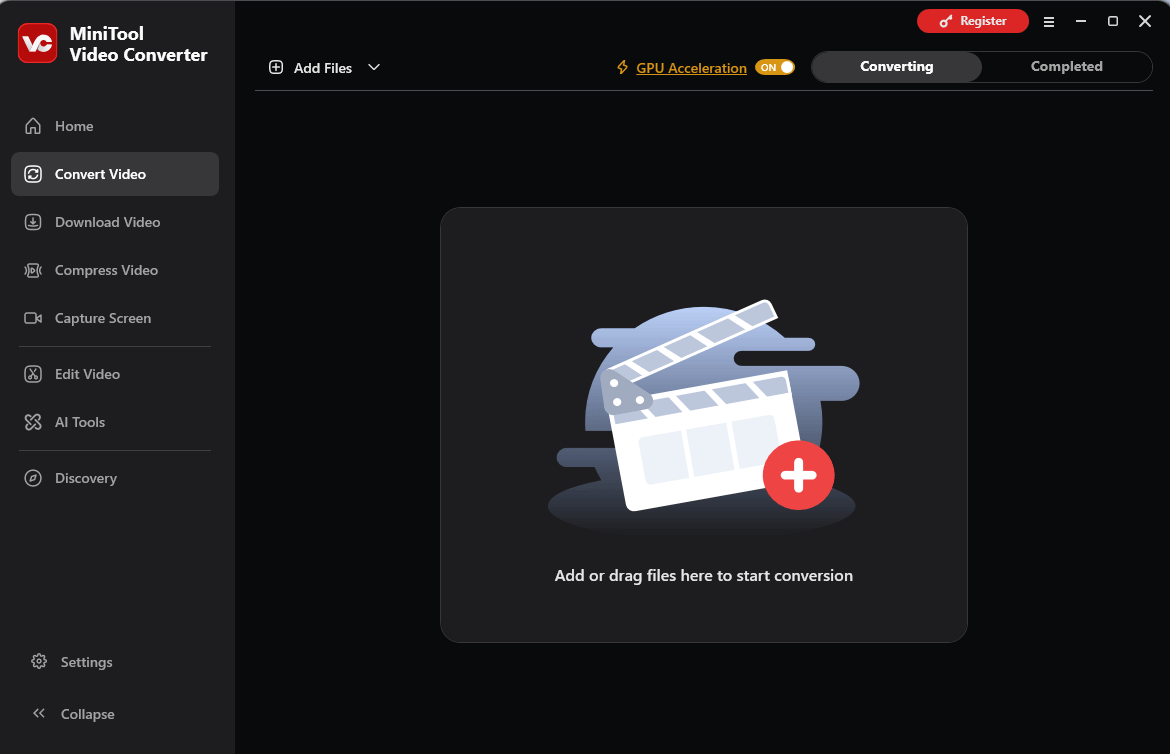
After launching the software, go to the Convert Video tab and click Add Files at the top to import the deaired video file, or drag and drop it into the application.
3) Select the output format
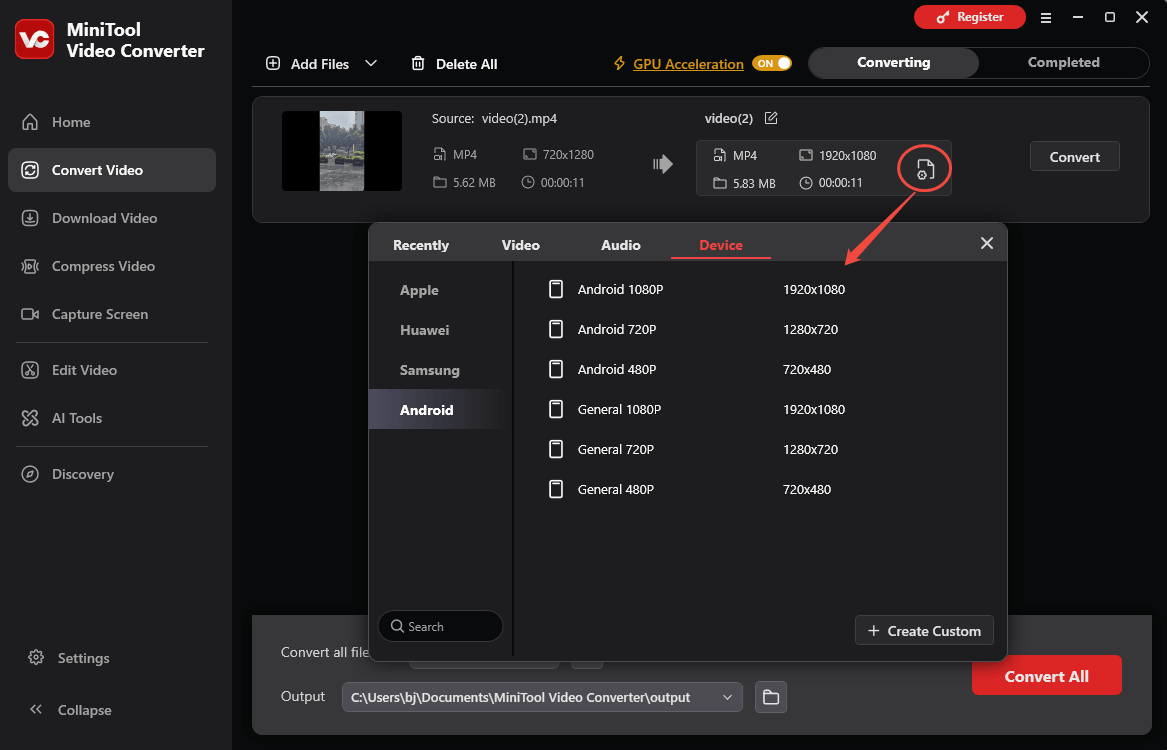
After importing the video, click the Settings icon on the right side. On the next pop-up window, go to the Video tab. To make the video compatible with Android, select MP4, then click the desired preset. Alternatively, go to the Device tab, select Android, and choose a preset.
4) Change the output folder
If you do not want to save the converted video in the default location, click the Output button at the bottom to select another folder.
5) Begin the conversion
Click the Convert button to start the conversion task immediately. Once done, transfer the video to your Android and see if it plays properly on your phone.
6. Update your Android operating system
Alternatively, you can update the Android operating system to fix the video not playing problem. Before updating, you’d better back up your data and files.
To update your Android OS, connect your phone to Wi-Fi, open the Settings app, scroll down to the bottom, click System and System update, follow the on-screen prompts, and complete the installation.
7. Repair your video
If a native video can’t play on your Android, that’s because it has become corrupt. Use a video repair tool to repair it and try playing it again.
Case 2: YouTube/Facebook Videos Not Playing
Sometimes, if your video can’t play on apps like YouTube and Facebook on your Android phone, try the following tips to fix the problem.
- Check your Wi-Fi network or enable cellular data.
- Restart the YouTube or Facebook app and play the video.
- Clear the cache in the YouTube or Facebook app.
- Update your YouTube or Facebook app.
Case 3: Videos Not Playing in Mobile Browser
If videos won’t play in the mobile browser on your Android phone, try these methods to resolve the issue.
- Check your Internet connection
- Update your mobile browser.
- Clear the browsing data.
- Restart your phone

Conclusion
With these simple methods, you can easily fix videos not playing on Android phones and enjoy smooth video playback. Finally, if you encounter problems while using MiniTool Video Converter, email support@minitool.com for assistance.
People Also Ask
H.263: for decoding and encoding (optional in Android 7.0+). Containers: .3gp, .mp4, .mkv.
H.264 AVC (Baseline & Main Profile): Universal decoder support; Containers: .3gp, .mp4, .ts, .mkv.
H.265 (HEVC): for decoding starting from Android 5.0+. Containers: .mp4, .mkv.
MPEG-4 SP: for decoding. Containers: .mp4.
VP8: for decoding since Android 2.3.3 and encoding since Android 4.3+. Containers: .webm, .mkv.
VP9: for decoding since Android 4.4+. Containers: .webm, .mkv, .mp4.
AV1: Decoder support starts from Android 10+, and both encoding/decoding are mandatory starting from Android 14+. Containers: .mp4, .mkv.
About The Author

Position: Columnist
Cora is a tech writer specializing in digital media workflows, with over six years of hands-on experience in video post-production, media transcoding, and screen capture. Her writing is always clear and practical. Cora also produces in-depth software reviews for users across skill levels to help them find the right tool and enjoy video editing.
User Comments :