

What Is H.264 and MP4?
- H.264 (AVC): A video codec used to compress video files while maintaining good quality and smaller file sizes. It is widely used for streaming, Blu-ray, and online videos.
- MP4: A multimedia container format used to store video, audio, subtitles, and images. It commonly uses the H.264 codec and is supported by most devices and platforms.
H.264 vs MP4: What’s the Difference?
Here’s a quick comparison of H.264 vs MP4.
| Feature | MP4 | H.264 |
| Type | Video container format | Video codec |
| File Size | Depends on the codec used | Smaller file sizes with high compression efficiency |
| Video Quality | Depends on the video codec inside the container | High quality at lower bitrates |
| Flexibility | Supported by most devices, platforms, and media players | Widely used for streaming, Blu-ray, and video recording |
The main difference between H.264 and MP4 is that H.264 is a video compression codec, while MP4 is a multimedia container format. Most of the time, H.264 refers to an MP4 file encoded with H.264 codec, and a file with the “.h264” extension is generally a misnamed MP4 file (or another supporting container file format such as .AVI or .MKV).
H.264 vs MP4: Video File Size
H.264 has a higher compression ratio than basic MP4 while maintaining the same quality. In terms of file size, H.264 is usually about 1-2 times more efficient than MP4 encoding, which will help save more space.
H.264 vs MP4: Video Quality
H.264 video appears to provide a better quality reality than previous standards at a more suitable compression ratio. Meanwhile, H.264 is more suitable for real-time playback and unchanged quality. H.264 and MP4 are better options if you expect high-quality video.
H.264 vs MP4: Flexibility
MP4 is a standard for wider video, mobile video, broadcast content, DVD broadcast, and broadcast television programming. The H.264 standard also emerged with the growing need to stream video more efficiently. Its programs work with almost all modern devices, apps, and platforms, and appear.
Whether you need to upload videos to YouTube, store videos on mobile devices, compress video file sizes, or have other uses, H.264 is always the better choice for exporting videos. However, there are some exceptions; for example, MPEG-4 may be a more suitable choice for certain applications or platforms.
How to Convert MP4 to H.264
Fast Track:
- Install MiniTool Video Converter.
- Import the MP4 video.
- Set H.265 as the output video codec.
- Select output folder.
- Begin the conversion.
- Check the converted video.
MiniTool Video Converter lets users convert MP4 videos to the H.264 codec for better compatibility, smaller file sizes, and efficient video compression. It also supports adjusting resolution, bitrate, frame rate, and audio settings. Here’s how:
 MiniTool Video Converter
-
 Batch convert video/audio files among 1000+ formats.
 - Quickly compress videos for easy storage and transfer.
- Accurately extract subtitles from video/audio files.
- Effectively enhance video quality.

Step 1. Download and Install MiniTool Video Converter
Download and install MiniTool Video Converter onto the computer. Once installation is complete, open the program.
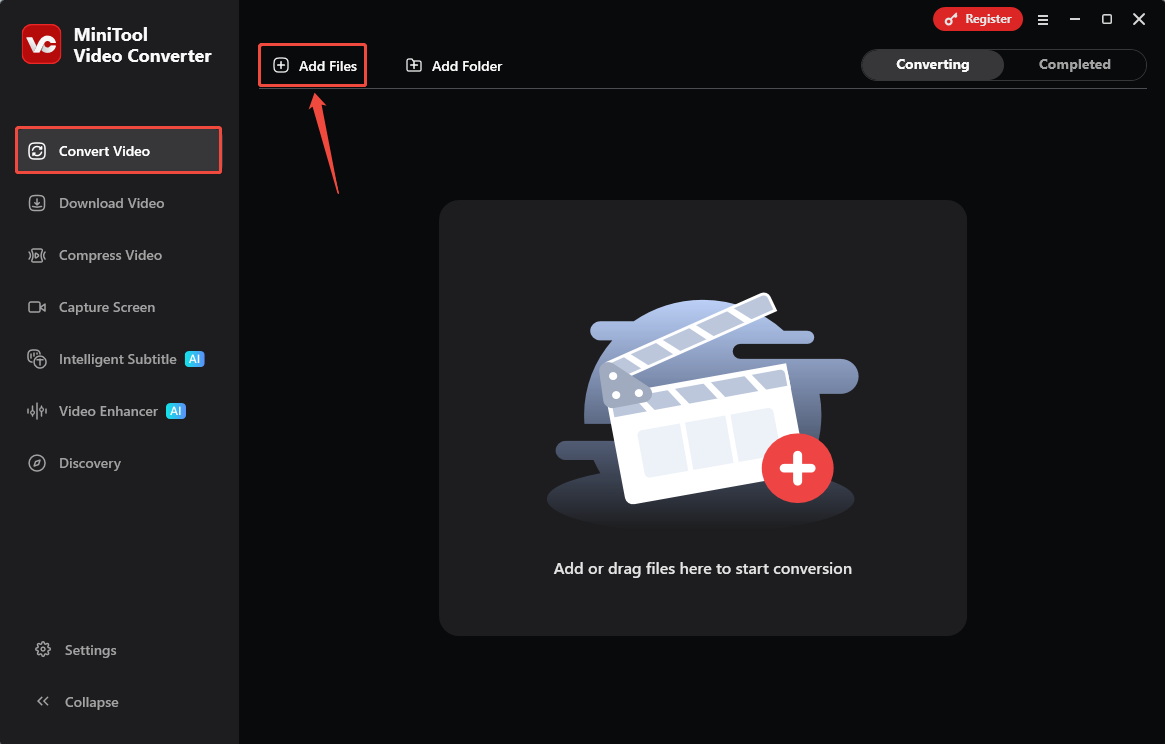
Step 2. Import the MP4 File
Select the Add Files option to upload the MP4 file to the application.
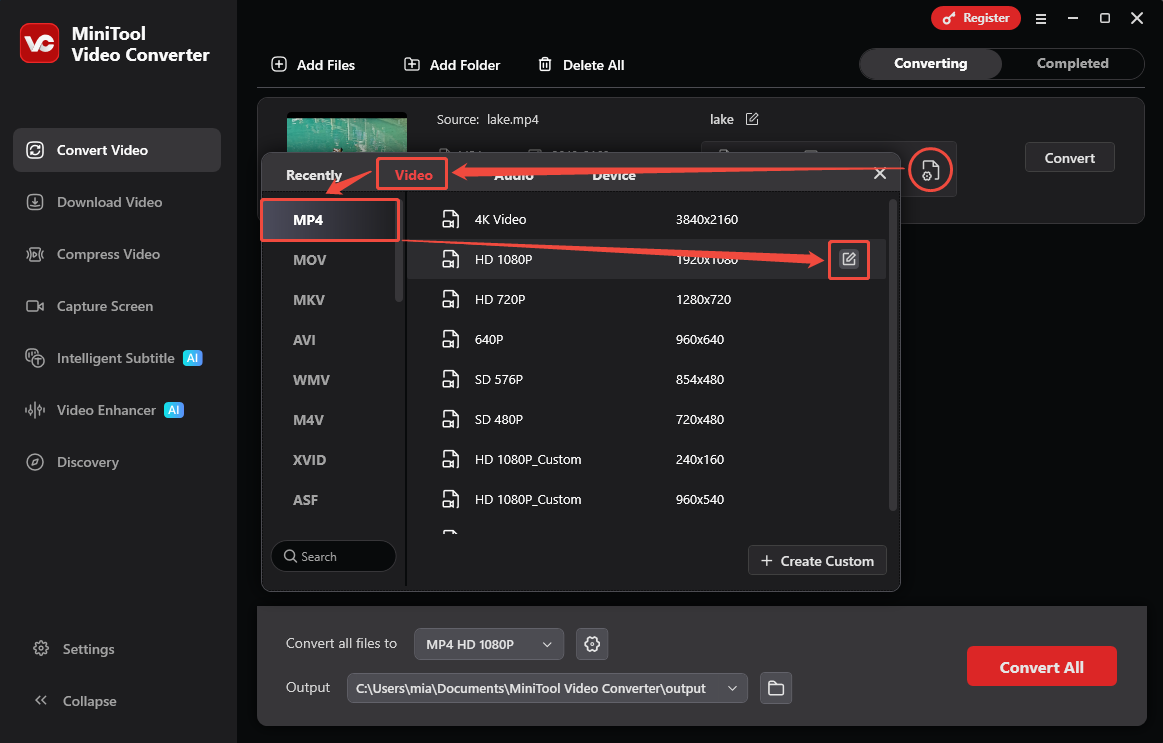
Step 3. Choose H.265 as the Output Format
Click the gear icon, switch to the Video tab, select MP4, choose the video quality, and click the edit icon next to it.
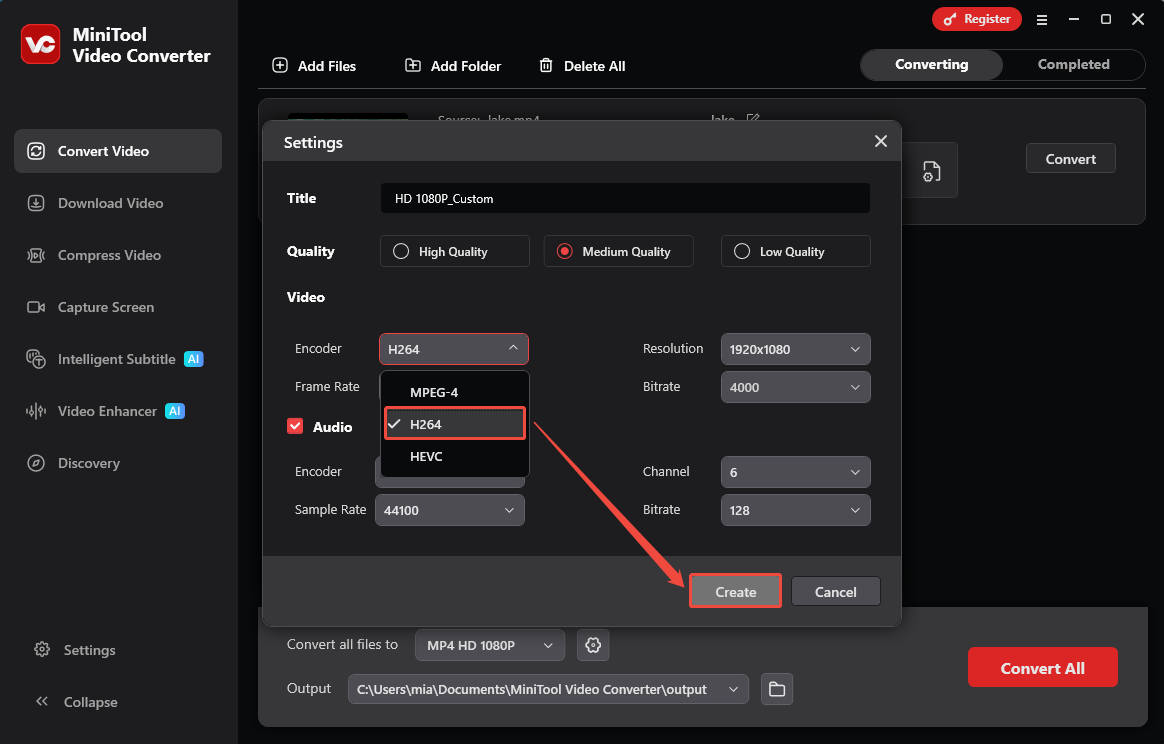
In the Settings window, expand the Encoder option, choose H264, and click on Create.
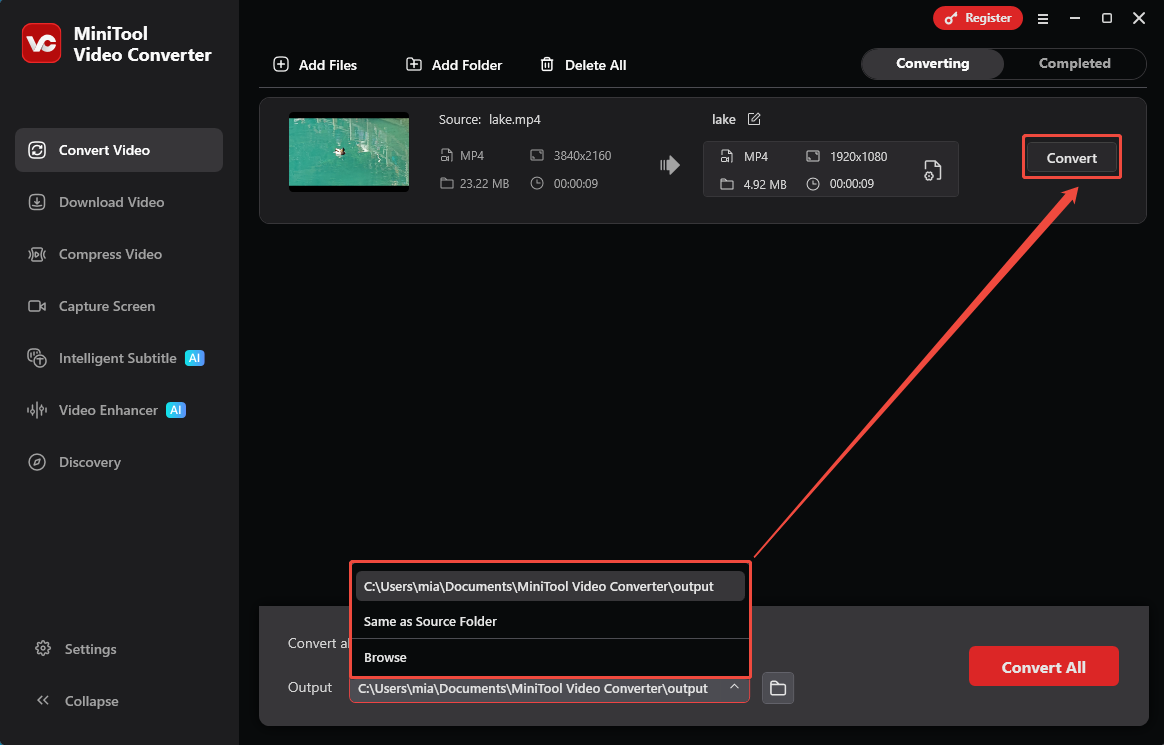
Step 4. Set Output Location
Expand the Output menu and choose a destination folder for the converted file.
Step 5. Begin the Conversion
Click the Convert option beside the task to get started.
Step 6. Check the Converted Results
Once conversion is complete, go to the Completed tab. Click the play icon to preview the file, the folder icon to open its location, or the more icon to compress the video.
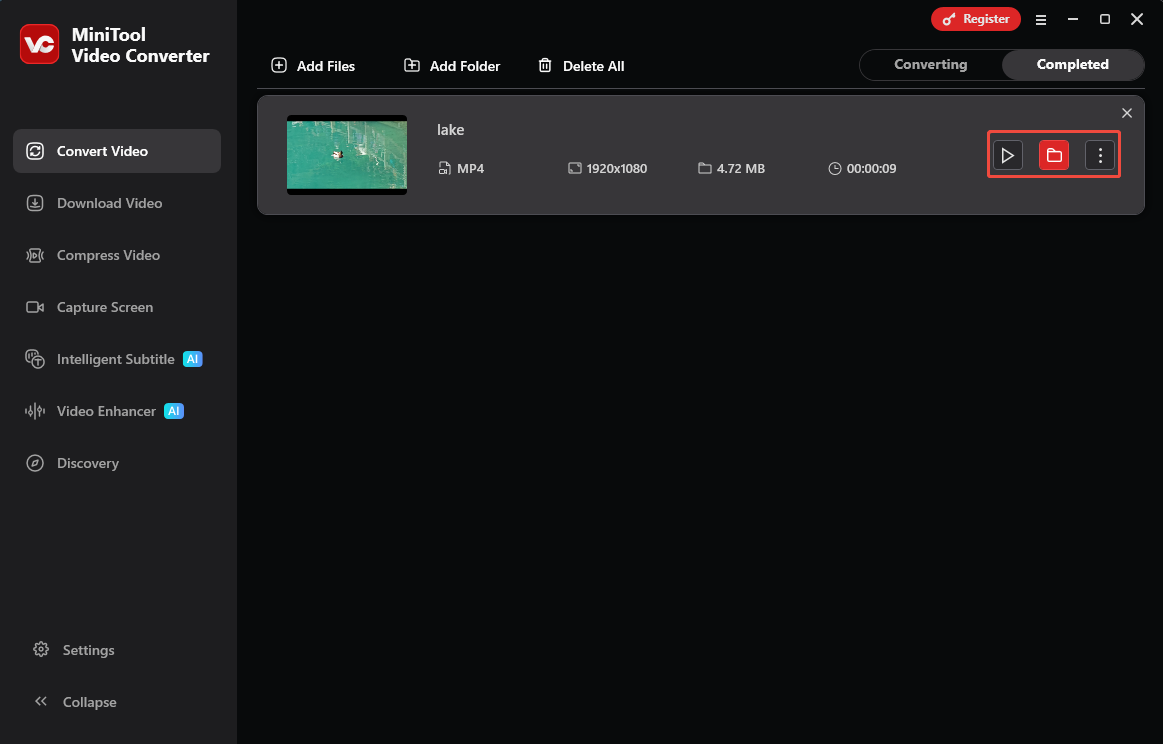
With MiniTool Video Converter, the conversion process is simple and suitable for streaming, sharing, and playback on different devices.
Final Words
Have you figured out the differences between H.264 and MP4 after reading this post? If you have any questions or suggestions about it, please let us know via support@minitool.com or share them in the comments section below.
User Comments :