

FLV and MP4 are two popular video formats, but they differ in quality, compatibility, and usage. This post explains the differences between FLV and MP4, compares their pros and cons, and introduces 3 simple ways to convert FLV to MP4 using MiniTool Video Converter, VLC Media Player, and Zamzar.
Although both FLV and MP4 are file formats used to store and stream videos, they are different. In this article, I will introduce their differences.
What Is FLV
FLV (Flash Video) is a video format developed by Adobe Systems for online video streaming. Introduced in 2002, it uses the .flv file extension and works with Adobe Flash Player 6 or later.
FLV was once widely used by websites, such as YouTube and Hulu, to deliver digital video content online. In some cases, FLV videos can also be embedded in SWF files.
What Is MP4
MP4 is a widely used video container format developed by the Motion Picture Experts Group. It can store video, audio, subtitles, and other data in a single file.
MP4 usually uses AAC for audio compression and MPEG-4 or H.264 for video compression, helping reduce file size while maintaining good quality. Due to its high compatibility, MP4 files can be played on most media players and devices.
FLV VS MP4: What’s the Differences
After getting basic information about FLV and MP4, let’s see the details about FLV vs MP4.
| FLV | MP4 | |
| Quality | Low | High |
| Compatibility | Limited | Wide |
| Released Date | 2002 | 1999 |
| Pros | Small size, good for streaming | High compatibility, no plug-ins needed |
| Cons | Slow webpage loading | Larger partially compressed files |
FLV VS MP4: Quality
MP4 offers better video quality than FLV. MP4 uses the H.264 video compression codec, which allows for good compression while retaining the high quality of the source video. However, FLV doesn’t support H.264 encoding.
Related article: Top 7 Video Editing Software – Improve Video Quality Easily
FLV VS MP4: Compatibility
MP4 has wider compatibility than FLV. MP4 can be played smoothly on almost all platforms since most platforms have dedicated MP4 decoding hardware. It supports Windows, Mac, Android, and other iOS devices.
FLV is mainly supported by web browsers and older Flash-based platforms. However, it has poor support on many mobile devices and modern browsers.
FLV VS MP4: History
FLV was introduced by Adobe in 2002 for Flash Player and online video streaming. Over time, Adobe expanded FLV support for audio, video, and text content.
MP4 was released in 1999 and updated several times before its final version was established in 2003.
FLV VS MP4: Pros and Cons
Pros of FLV:
- Small file size.
- Widely used for streaming videos.
- A multitude of uses as movies, online presentations, banner ads, internet animations.
Cons of FLV:
- Cost longer time to open a web page with FLV file.
Pros of MP4:
- Compatible with all devices include Windows, Mac, and mobile phones.
- No plug-ins and codecs are required to run it.
- Most video and audio files downloaded from the Internet are wrapped in the MP4 format.
Cons of MP4:
- If partially files are compressed by MP4, it takes up more space than a fully compressed file.
Which One to Choose? FLV or MP4?
Whether choose FLV or MP4 is based on your needs. Choose FLV for online video streaming and choose MP4 for better compatibility and playback on modern devices. FLV is suitable for web-based video content but usually requires a Flash plugin to play. MP4 works on most devices and media players without additional plug-ins.
How to Convert FLV to MP4
- Option 1: Use MiniTool Video Converter
- Option 2: Use VLC media player.
- Option 3: Use Zamzar.
This part introduces how to convert FLV to MP4 with the above 3 tools.
1. MiniTool Video Converter
To convert FLV to MP4 offline, use MiniTool Video Converter, which allows watermark-free video and audio conversions. What’s more, it supports batch conversion.
Fast Track:
- Install and open MiniTool Video Converter.
- Add the target FLV file.
- Set output format and video quality.
- Start conversion.
- Check the converted file.
 MiniTool Video Converter
-
 Batch convert video/audio files among 1000+ formats.
 - Quickly compress videos for easy storage and transfer.
- Accurately extract subtitles from video/audio files.
- Effectively enhance video quality.
Then how to convert FLV to MP4 using MiniTool Video Converter? Follow the guide below.
Step 1: Install and open MiniTool Video Converter.
Download and launch the MiniTool Video Converter first.
Step 2: Add the target FLV file.
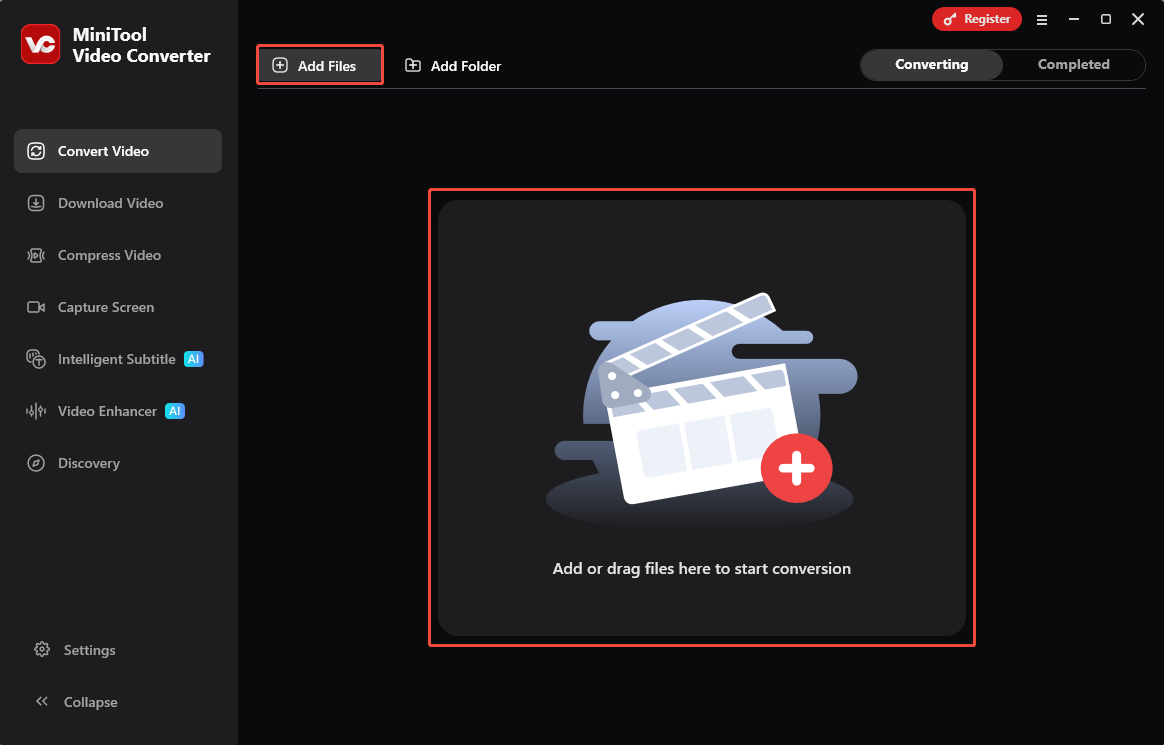
In the Convert Video page, click Add Files to choose the FLV file as the source file or you can drag the FLV file to the main interface.
Step 3: Set output format and video quality.
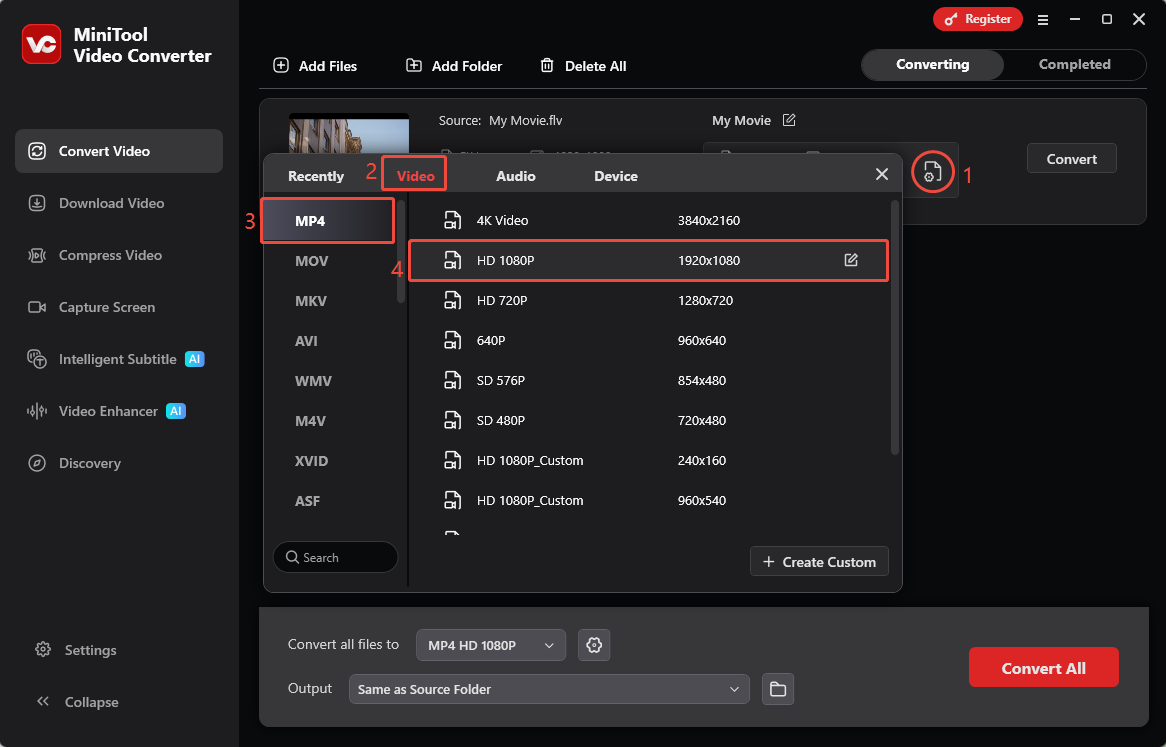
Click the gear icon > Choose Video > Click MP4 > Select the output format.
Step 4: Start conversion.
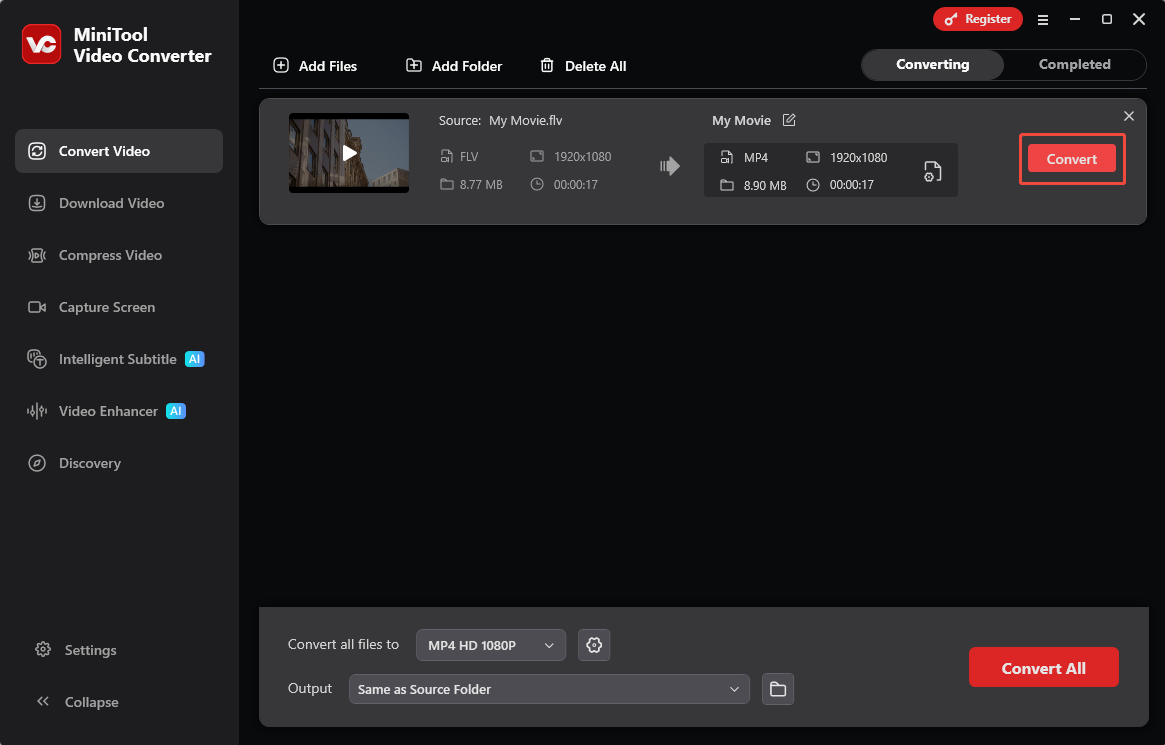
Click the Convert button to begin the conversion.
Step 5: Check the converted file.
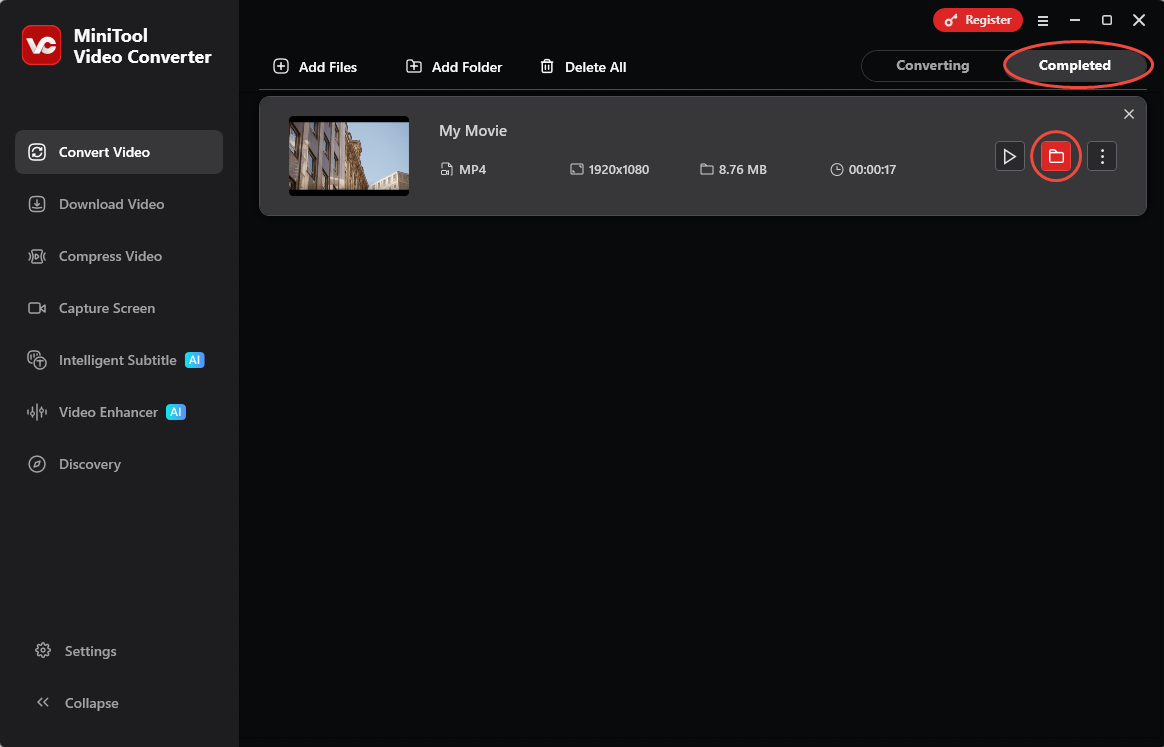
After converting FLV to MP4 successfully, go to the Completed tab and then find the converted FLV file by clicking the folder icon.
You can also use MiniTool Video Converter to convert MP4 to FLV.
Main Features of MiniTool Video Converter:
- It supports more than 1000 output formats.
- It enables you to perform batch video conversion at once.
- It is FREE and there are no ads.
- It is only suitable for the Windows platform.
2. VLC Media Player
If you want to convert FLV to MP4 or MP4 to FLV on Mac, the VLC media player can help you do that. It is a free and open-source cross-platform multimedia player and framework. It can be used to play most multimedia files, such as DVDs, audio CDs, VCDs, and various streaming media protocols.
Now, let’s see how to change FLV to MP4 with the VLC media player.
Fast Track:
- Open VLC Media Player.
- Go to Media > Convert / Save.
- Add the FLV file and select MP4.
- Choose a destination and click Start.
Step 1: Open VLC Media Player.
Download VLC Media Player and install it on your computer. Then launch it to get its main interface.
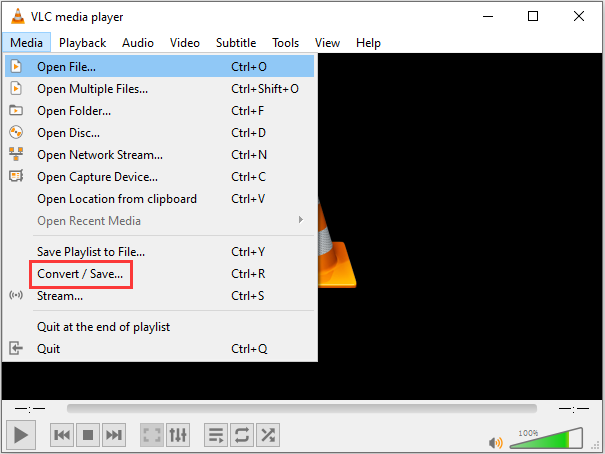
Step 2: Go to Media > Convert / Save.
navigate to Media > Convert / Save….
Step 3: Add the FLV file and select MP4.
Click the Add… button to import the FLV file and click Convert / Save. Then, click the MP4 profile.
Step 4: Choose a destination and click Start.
Click Browse to select a destination folder and click the Start button.
Now, you can go to the destination folder to find your MP4 file.
3. Zamzar
You can also use another online converter – Zamzar to convert FLV to MP4. It can work with any operating system.
Here is how to use Zamzar to do the conversion.
Fast Track:
- Upload the FLV file to Zamzar.
- Select MP4 and click Convert Now.
- Download the MP4 file.
Step 1: Upload the FLV file to Zamzar.
Go to Zamzar and choose Add File… to add the FLV file.
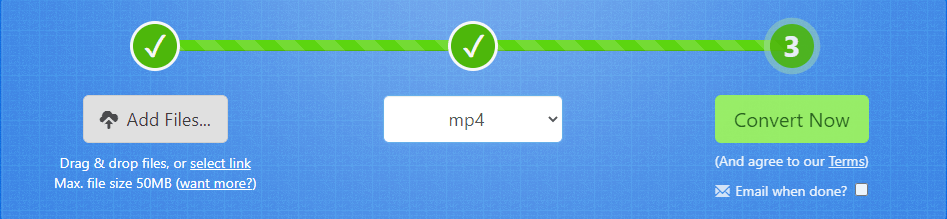
Step 2: Select MP4 and click Convert Now.
Click Convert To to select the MP4 format and click the Convert Now option.
Step 3: Download the MP4 file.
Then, it will start the conversion process. You just need to wait for it. After that, you can click the Download button to save the MP4 file on your device.
Main Features
- It supports more than 1200 file formats.
- The uploaded file can be as large as 150 MB.
Both online and offline converters are free. Offline tools offer more features, while online ones require no download. Choose based on your needs.
Bottom Line
MP4 offers better quality and wider compatibility than FLV, making it a better choice for most users. However, FLV still works well for some web-based streaming tasks. If you need to convert FLV to MP4 or vice versa, you can use MiniTool Video Converter, VLC Media Player, or Zamzar.
If you have any questions or suggestions about it, please let us know via support@minitool.com.
User Comments :