

How to convert all to MP3? Simply download and install a useful conversion tool, import a target file, configure MP3 as the converted format, start the conversion process, and check or save the output audio.
MP3 can be played on almost all devices and take up less storage space. Therefore, after converting the files to MP3 format, you can easily save, share, and listen to the recorded audio anywhere.
How to Convert All to MP3
- Use MiniTool Video Converter
- Use Anything2MP3
Converting any file to MP3 only requires a few simple and gradual steps.
Fast Steps:
- Obtain a video/audio to audio converter
- Upload a file
- Set MP3 as the converted format
- Start the conversion
- Check or save the converted audio
Method 1. Use MiniTool Video Converter
MiniTool Video Converter is an all-in-one MP3 converter. It has a simple and clean interface, which makes it easy to navigate and use. Additionally, you are allowed to convert audio or video to MP3 in a batch at a faster speed. The following is a detailed guide on how to convert videos to MP3 using this software
 MiniTool Video Converter
-
 Batch convert video/audio files among 1000+ formats.
 - Quickly compress videos for easy storage and transfer.
- Accurately extract subtitles from video/audio files.
- Effectively enhance video quality.

1. Download and Install MiniTool Video Converter
Download and install MiniTool Video Converter. Then, launch this application.
2. Upload the Target File
In the default Convert Video tab, click on the Add Files option to upload a target file.
3. Specify MP3 as the Output Format
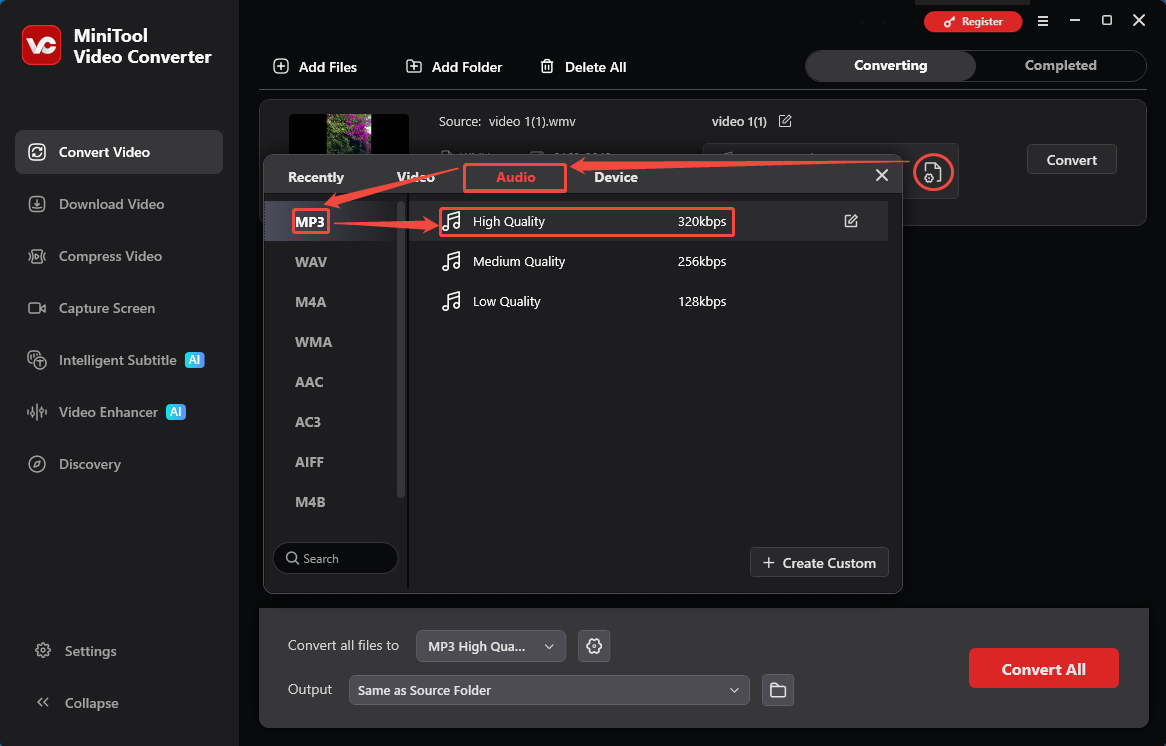
On the imported conversion task, click on the Gear icon to open the output format window. There, switch to the Audio tab and choose MP3. Then, select a proper audio quality option, such as High Quality.
4. Start the Conversion
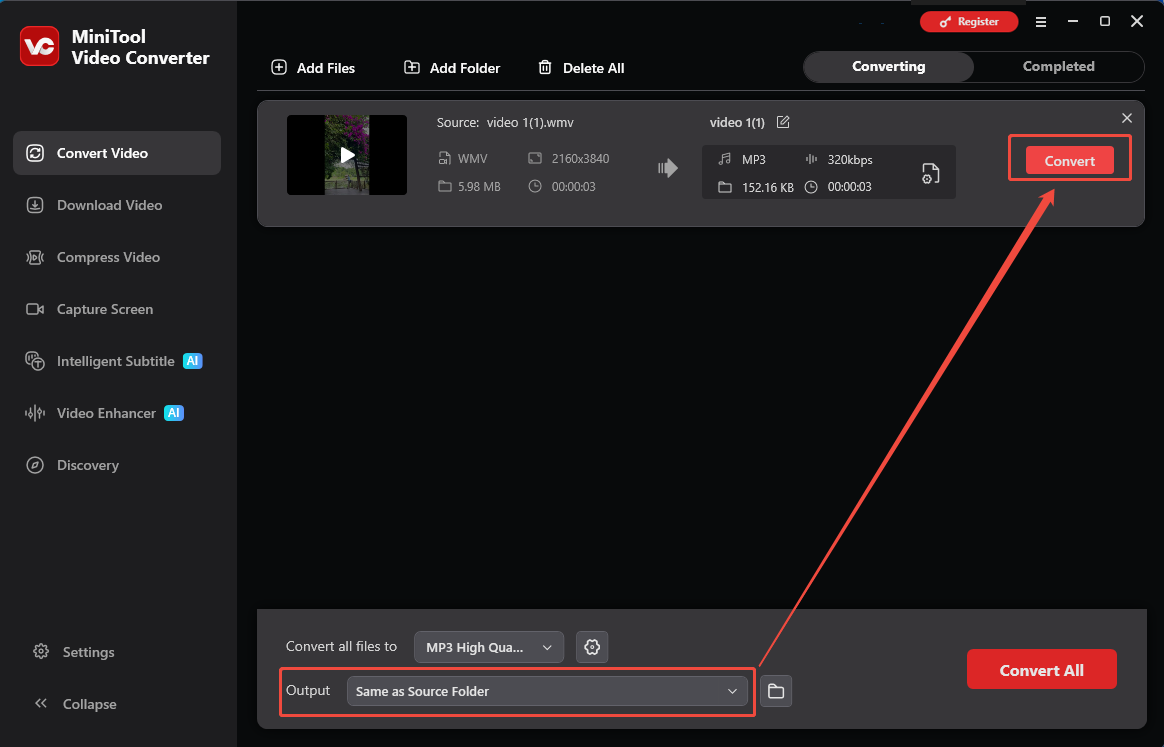
Expand the Output format to select a storage location for the converted audio. Then, click on the Convert button to begin converting.
5. Check and Locate the Converted Video
Once the converted task finishes, this converted audio will land on the Completed tab. There, click on the Play icon to check the output audio. Or click on the Folder icon to locate it on the PC.
This software helps quickly and easily convert all videos or audio to MP3. It also allows you to customize the resolution, encoder, frame rate, bitrate, and more.
Method 2. Use Anything2MP3
Another All to MP3 converter is Anything2MP3. This tool is a free online video converter. It’s capable of downloading MP3 from websites like Vimeo, Dailymotion, Metacafe, Google videos, and more. If you simply want to extract MP3 from a video or change audio format, it can also satisfy your needs. Here’s how to convert all to MP3 with the free audio converter - Anything2MP3.
1. Open your browser and enter the Anything2MP3 website.
2. Tap on SELECT A FILE to import the video or audio file from local.
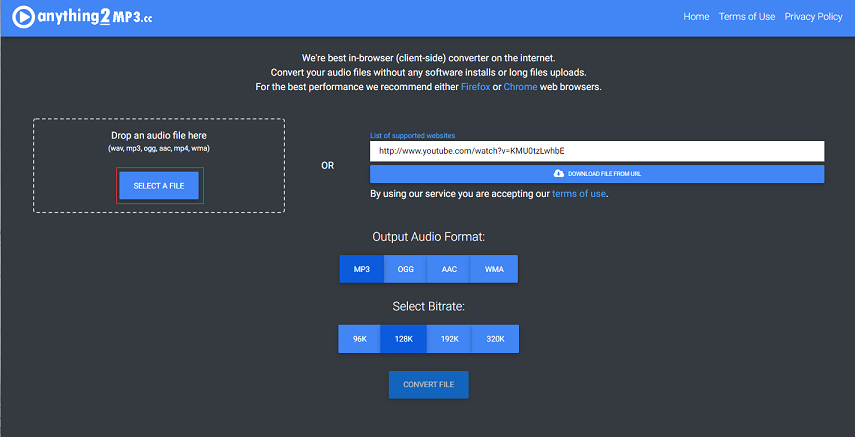
3. Then select the desired bitrate and hit the CONVERT FILE button.
4. When the conversion process is done, download the MP3 file from the website.
Conclusion
This article shows how to convert all to MP3 with 2 practical conversion tools, including MiniTool Video Converter and Anything2MP3. Choose an appropriate converter based on your device and file size.
If you need any support with MiniTool Video Converter, send an email to the MiniTool official to support@minitool.com.
User Comments :